


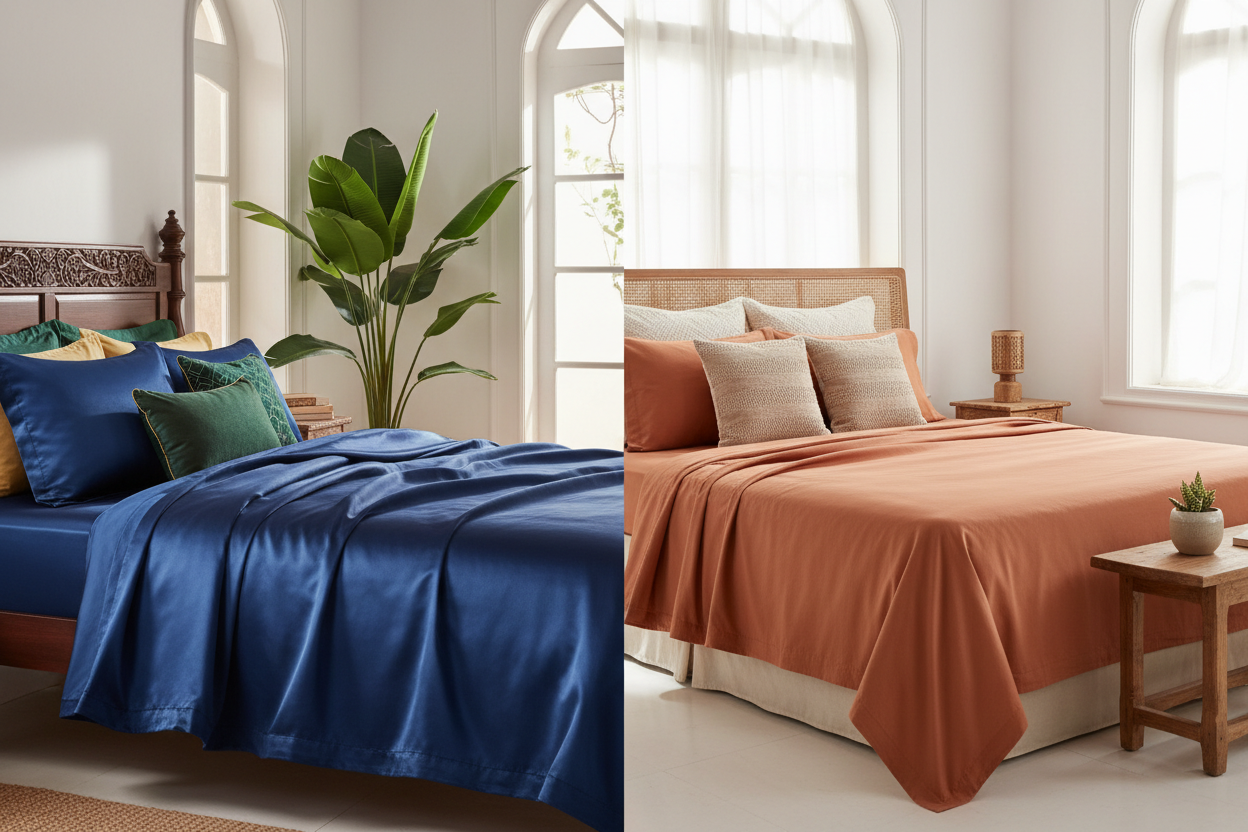
Quick Answer: Cotton bedsheets win for daily Indian use — breathable, skin-safe, easy to wash, long-lasting. Satin bedsheets win on glamour and hair/skin friendliness — the smooth surface reduces friction (less hair frizz, fewer face creases). For year-round Indian climates, choose cotton as your daily set and add a satin set for special occasions or beauty routines. Pure silk satin is the premium option; polyester satin is the affordable everyday variant.
Satin sheets always look luxurious in photos. They feel cool and smooth on first touch, drape beautifully, and have an unmistakable sheen. But "luxurious in photos" and "comfortable to sleep on every night in 38°C heat" are two different things. This guide explains where satin actually fits in an Indian home — and where cotton remains the smarter pick.
Whether you're shopping the Satin 300 TC collection or sticking with classic cotton bedsheets, here's what to know first.
What is satin?
Satin is a weave, not a fibre. The weave creates a glossy, smooth top surface and a matte underside — the signature satin look. The actual fibre can be silk, polyester, or rayon. Pure silk satin is luxurious and expensive; polyester satin is affordable and durable. Most "satin bedsheets" in India are polyester satin.
What is cotton?
Cotton bedsheets are made from natural cotton fibres in various weaves (percale, sateen, muslin, jacquard). Cotton breathes, washes easily, and is the daily-use standard in Indian homes.
Satin vs cotton: head-to-head
Feel on first touch
Satin wins. Cool, smooth, glossy — the "wow" factor on first lying down.
Breathability
Cotton wins decisively. Cotton fibres allow air to move freely; satin (especially polyester satin) traps heat. In Indian summers, this is the deciding factor.
Hair and skin friendliness
Satin wins. The smooth surface reduces friction — less hair tangling, fewer pillow creases on the face, less skin pulling. Dermatologists often recommend silk or satin pillowcases for sensitive skin and hair care.
Sweat handling
Cotton wins. Satin doesn't absorb moisture well — sweat pools on the surface and feels sticky.
Durability
Cotton wins. Premium cotton lasts 4–6 years. Polyester satin lasts 2–4 years before the sheen dulls or the fabric snags. Pure silk satin is delicate and lasts 1–3 years with careful care.
Care difficulty
Cotton wins. Machine-washable, tolerates regular use. Satin (especially silk) needs gentle handling, often dry-cleaning, and snags on rough surfaces.
Look
Satin wins on glamour. Cotton wins on classic, lived-in beauty.
Price
Cotton wins on value. Polyester satin can be cheaper than premium cotton, but lasts shorter. Silk satin is far more expensive than equivalent cotton.
Where satin sheets make sense
- Guest rooms or special occasions: the wow factor for visitors.
- Beauty-focused sleep routine: hair frizz, sensitive skin, face creases.
- AC bedrooms in cooler months: breathability matters less when temperature is controlled.
- Decorative bed setup: satin photographs beautifully for home content.
- Pillowcases specifically: a smart compromise — cotton sheet + satin pillowcase gives both worlds.
Browse the Satin Pillow Covers collection for the pillowcase-only approach, or the Satin Royale range for full sets.
Where cotton remains the smarter daily pick
- Daily-use master bedrooms: breathable, durable, washable.
- Hot, humid climates: cotton breathes; satin traps heat.
- Kids' rooms: cotton is skin-safe, hypoallergenic, easy to wash through stains.
- Non-AC bedrooms in summer: cotton is the only comfortable option.
- Sensitive skin (eczema, acne): cotton's breathability prevents heat-trapped irritation.
The hybrid approach most Indian homes use
Cotton for daily sleep. Satin for the pillowcase only (hair and face benefits without overheating). Satin sets for occasional use — special weekends, special guests, photo shoots. The main bedsheet collection covers daily cotton; satin pillow covers handle the beauty side.
Common satin myths debunked
- "Satin is the same as silk." No. Satin is a weave; silk is a fibre. Most satin bedsheets in India are polyester.
- "Satin sheets are always cool." Cool on first touch — but they trap body heat once you've been on them for an hour.
- "Satin lasts as long as cotton." Generally no. Satin (especially polyester) loses sheen and snags within 2–4 years.
- "Satin sheets are always luxurious." Only pure silk satin truly is. Polyester satin can feel cheap if the GSM is too low.
Frequently Asked Questions (FAQs)
Q. Are satin sheets good for hot sleepers?
A. Surprisingly, no. They feel cool on first touch but trap heat over the night. Cotton is better for sustained cooling.
Q. Do satin sheets really help with hair frizz?
A. Yes — the smooth surface reduces friction during sleep. Most beauty experts recommend at least a satin pillowcase.
Q. Are satin pillowcases better than satin sheets?
A. Often yes. You get the hair/skin benefits where they matter (head and face) without trapping body heat under satin.
Q. How often should I wash satin sheets?
A. Less often than cotton — every 10–14 days. Gentle cycle, cold water, no fabric softener.
Q. Can I machine wash polyester satin?
A. Yes — gentle cycle, cold water. Silk satin should be hand-washed or dry-cleaned.
Final Word. Cotton for daily sleep, satin pillowcase for hair and face, satin full sets for special occasions. Browse the cotton bedsheet collection and the Satin Royale collection for both.
More from the Bedsheet Buying Series
- → Thread Count Explained
- → Percale vs Sateen Bedsheets
- → King vs Queen vs Double Sizing
- → Cotton vs Microfiber Bedsheets
- → Bedsheet GSM Explained
- → Best Bedsheets for Hot Sleepers
- → Combed Cotton vs Regular Cotton
- → Fitted vs Flat Bedsheets
- → How to Wash Cotton Bedsheets
- → Why Pre-Shrunk Cotton Matters
- → 300 TC vs 200 TC: Real Differences
- → Satin vs Cotton Bedsheets (you are here)
