


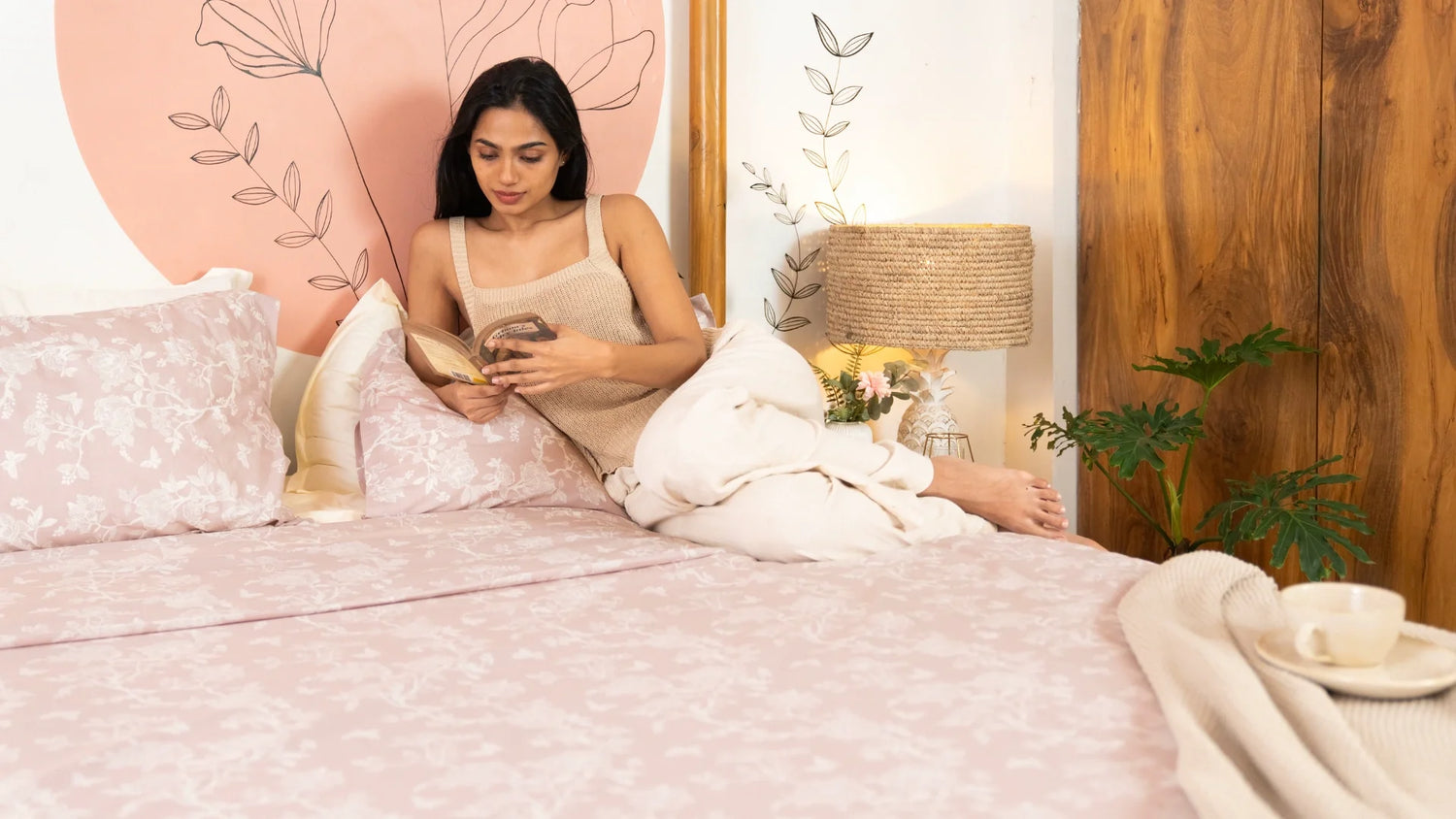
Quick Answer: Hot sleepers in India should pick percale cotton (crisp, breathable, light), 100% combed cotton in 200–300 TC range, or muslin for the lightest summer feel. Avoid microfiber, satin, and sateen weaves above 400 TC — these trap heat and feel sticky in humid Indian summers. The single best fabric for hot Indian sleepers is percale 300 TC: cool to the touch, durable, and silky after a few washes.
Sleeping hot in an Indian summer is the worst kind of bad sleep. You toss, you flip the pillow to the cool side, you wake up sweaty at 3 AM. The mattress, the room temperature, even the pillow — they all matter, but the bedsheet is the layer touching your skin all night. Get the fabric wrong and no amount of AC fully fixes it.
This guide ranks bedsheet materials by cooling performance for the Indian context. Whether you sweat through summers or just want better sleep year-round, start with the bedsheet collection and pick by fabric, not by colour.
What makes a bedsheet "cooling"?
Three factors decide whether a sheet feels cool to sleep on:
- Breathability: how easily air moves through the weave.
- Moisture-wicking: how fast the fabric pulls sweat away from skin.
- Initial feel: how cool the fabric is to the touch when you first lie down.
Natural fibres (cotton, muslin, linen) win on all three. Synthetics (microfiber, polyester satin) lose on all three — they're warmer to the touch and trap moisture.
1. Percale cotton — the gold standard for hot sleepers
Percale is a plain weave (over-one-under-one) that creates a matte, crisp, breathable fabric. It feels cool against the skin because air passes freely between threads. Percale also has that "hotel sheet" crisp feel that softens beautifully with each wash.
The sweet spot for India is 300 TC percale: cool, durable, and silky after 5–10 washes. Browse the Percale 300TC collection — engineered specifically for Indian summers.
2. Muslin — the lightest summer fabric
Muslin is a loose plain-weave cotton — lightweight, breathable, and quick-drying. Less luxurious than percale but unbeatable for hot, humid coastal climates. Many parents use muslin bedding for babies for exactly these reasons; the same logic applies to hot-sleeping adults.
3. 100% combed cotton, 200–300 TC
Regular combed cotton bedsheets at 200–300 TC are the budget-friendly cooling pick. The combing process removes short fibres, leaving longer, stronger threads that weave into a smoother, softer surface. Combed cotton breathes well and lasts 3–5 years with care. The Premium 300 TC range uses long-staple combed cotton across single, double, queen, and king sizes.
4. Lightweight linen — for the slightly luxe pick
Linen is the coolest natural fibre in the world (yes, cooler than cotton). It wicks moisture beautifully and gets softer with each wash. Indian linen options are limited and pricier than cotton, but worth the splurge for serious hot sleepers. The Belgium Linen Luxe range is a small but premium starting point.
Fabrics to avoid if you sleep hot
- Microfiber: traps body heat, feels warm immediately on contact.
- Satin and polyester sateen: beautiful, silky — but they hold heat and feel sticky in humidity.
- 1000 TC sheets: almost always multi-ply marketing. The denser weave traps heat regardless of fibre.
- Flannel: winter fabric. Suffocating in Indian summers.
- Polyester blends: the higher the polyester percentage, the hotter the sleep.
The cooling sheet checklist
- ☐ 100% cotton, muslin, or linen (no microfiber, no blends).
- ☐ Percale weave (plain, matte) for the crispest feel.
- ☐ 200–300 TC sweet spot (not 400+).
- ☐ 110–140 GSM for ideal breathability.
- ☐ Light colour — white, ivory, pastel — reflects rather than absorbs.
- ☐ Pre-shrunk (so the weave stays open after washing).
Frequently Asked Questions (FAQs)
Q. What is the coolest bedsheet fabric for India?
A. Percale cotton at 300 TC. Cool to the touch, breathable, and softens with washes.
Q. Is higher thread count better for hot sleepers?
A. No. Above 300–400 TC, sheets become denser and warmer. Stick to the 200–300 TC range.
Q. Does the colour of the bedsheet affect temperature?
A. Slightly. Light colours absorb less heat than dark ones, especially if your bedroom gets direct sun.
Q. Are satin sheets bad for hot sleepers?
A. Yes — satin and synthetic sateen hold heat. They're better for cold-month luxury, not Indian summers.
Q. How often should hot sleepers wash sheets?
A. Every 5–7 days in summer (vs every 10–14 days in winter). Sweat builds up faster and reduces breathability.
Final Word. If you sleep hot, the single biggest upgrade is switching to percale 300 TC cotton. Browse the 300 TC range or the percale collection in single, double, queen, and king.
More from the Bedsheet Buying Series
- → Thread Count Explained
- → Percale vs Sateen Bedsheets
- → King vs Queen vs Double Sizing
- → Cotton vs Microfiber Bedsheets
- → Bedsheet GSM Explained
- → Best Bedsheets for Hot Sleepers (you are here)
- → Combed Cotton vs Regular Cotton
- → Fitted vs Flat Bedsheets
- → How to Wash Cotton Bedsheets
- → Why Pre-Shrunk Cotton Matters
- → 300 TC vs 200 TC: Real Differences
- → Satin vs Cotton Bedsheets
