


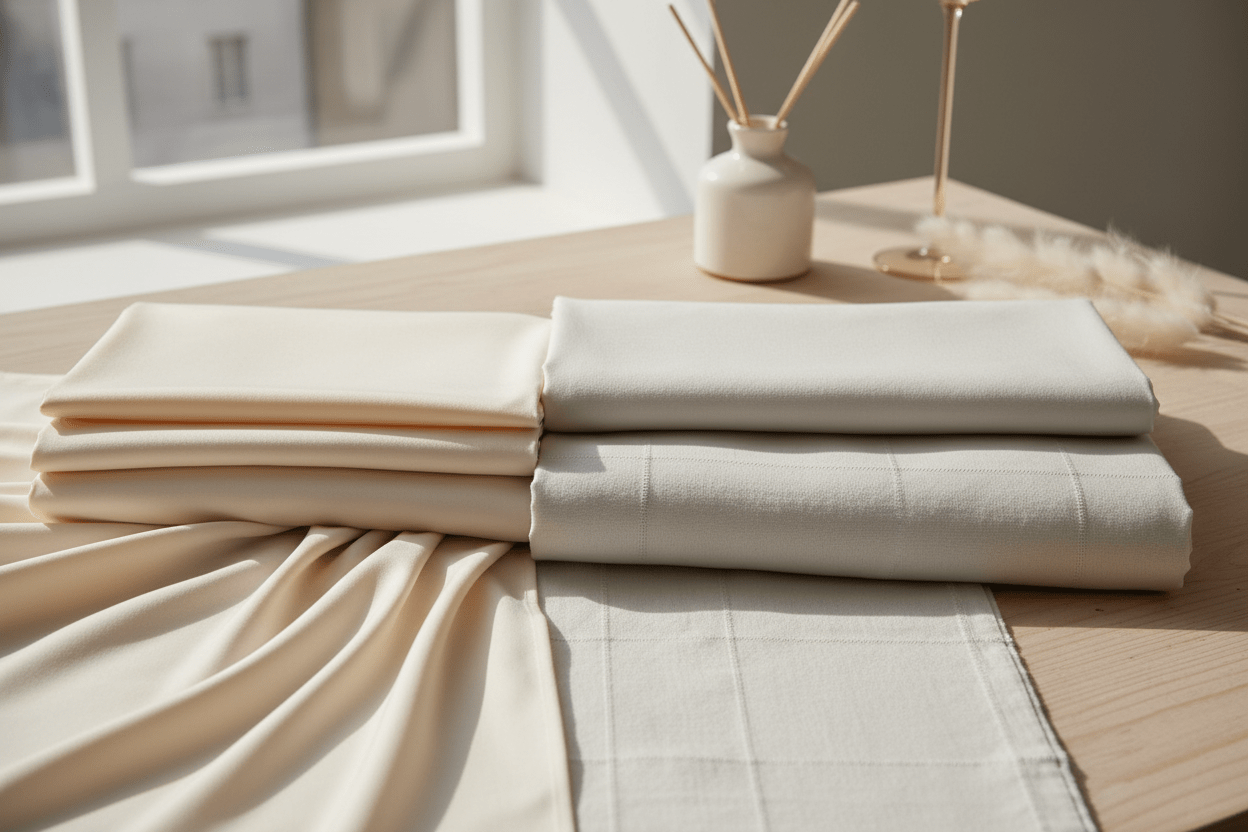
Quick Answer: Combed cotton is regular cotton that's been brushed (combed) to remove short, weak fibres — leaving only the long, strong ones. The result is a softer, stronger, longer-lasting bedsheet that pills less and washes better than regular carded cotton. The premium is real, not marketing — combed cotton sheets cost 15–30% more but last 1–2 years longer and feel meaningfully smoother. For daily-use master bedrooms, combed cotton is worth the extra.
"Combed cotton" appears on premium bedsheet labels everywhere in India, and most buyers assume it's a marketing term — like "luxury" or "premium". It isn't. Combed cotton is an actual manufacturing step that changes how the fabric performs. Understanding the difference helps you decide when to pay the premium and when to skip it.
This guide explains exactly what combing does, when it matters, and how to spot real combed cotton versus the inflated claims. Whether you're upgrading to the Premium 300 TC range or just curious, here's what to know.
What is regular (carded) cotton?
Cotton fibres come in varying lengths. Carded cotton goes through a basic cleaning step that removes dirt and aligns fibres, but leaves both long and short fibres in the mix. The result is a yarn with a slightly rough feel, more pills over time, and shorter lifespan.
Carded cotton is what most budget bedsheets are made from. It's perfectly fine — just not premium.
What is combed cotton?
Combed cotton goes through an extra step after carding: a fine-toothed comb removes all short fibres (under 12mm), leaving only the long ones. This adds about 15% to manufacturing cost — but it makes a real difference:
- Smoother yarn: only long fibres = no rough edges sticking out.
- Stronger thread: long fibres twist into stronger threads.
- Less pilling: short fibres are what pill at the surface. Remove them, problem reduced.
- Softer hand feel: noticeable from the first touch.
Combed vs regular cotton: head-to-head
Softness
Combed wins meaningfully. The difference is noticeable on first feel, and grows after 5–10 washes. Combed cotton sheets feel like premium hotel sheets; regular cotton feels like standard hostel sheets.
Durability
Combed wins. Long fibres make stronger thread, which means the sheet survives more wash cycles before thinning. Expected lifespan: combed 4–6 years, regular 3–4 years.
Pilling
Combed cotton pills far less. After 50 washes, regular cotton shows visible pilling and surface fuzz. Combed cotton stays mostly smooth.
Price
Combed costs 15–30% more. The premium is real but not enormous.
Wash behaviour
Combed cotton holds shape better after repeat washes. Regular cotton can shrink or distort slightly after 20+ washes.
Print quality
Combed cotton's smoother surface takes prints more precisely. Regular cotton can have slightly fuzzier print edges.
When combed cotton is worth the premium
- Daily-use master bedrooms: the durability and feel justify the cost over 4–5 years of nightly use.
- Hot sleepers: combed cotton's smooth weave breathes slightly better.
- Sensitive skin: fewer short fibres = less surface irritation for eczema-prone sleepers.
- Gift purchases: the premium feel is immediately noticeable to the recipient.
When regular cotton is fine
- Guest rooms: low use, durability doesn't matter as much.
- Kids' rooms: sheets get spills and stains; replacing is normal.
- Rental flats: short-term use, lower spend.
- Backup sets: in the cupboard, used 5x a year.
How to spot real combed cotton
Look for these on the product page:
- Explicit "100% combed cotton" labelling. Not "cotton blend" or "cotton rich".
- Long-staple variety mentioned: "long-staple", "Suvin", "Pima", "Egyptian", "Sea Island" all indicate combed long fibres.
- Higher thread count without ply inflation: 200–400 single-ply TC.
- GSM stated: 130–150 GSM is normal for premium combed cotton.
- Pre-shrunk certification.
Indian cotton vs Egyptian cotton — does origin matter?
Egyptian cotton is famous for its long fibres, but premium Indian long-staple varieties (Suvin, Shankar-6, DCH-32) are just as good and often more affordable. "Egyptian" on a label has become a marketing term — the real spec is "long-staple combed", regardless of origin.
Care for combed cotton
Standard cotton care applies — gentle machine wash in cold or warm water, mild detergent, air-dry in shade. Combed cotton tolerates slightly higher wash temperatures (up to 40°C) without losing softness. Iron while damp for the crispest finish.
Frequently Asked Questions (FAQs)
Q. What is the difference between combed and regular cotton bedsheets?
A. Combed cotton has all short fibres removed, leaving only long ones. The result is smoother, stronger, less-pilling fabric.
Q. Is combed cotton worth the higher price?
A. For daily-use bedrooms — yes. The fabric lasts 1–2 years longer and feels noticeably better.
Q. How can I tell if my bedsheet is combed cotton?
A. Check the label. "100% combed cotton" or "long-staple combed cotton" are explicit. Vague "cotton" or "cotton rich" usually means carded.
Q. Does combed cotton shrink?
A. Yes, but less than carded cotton — and reputable brands pre-shrink before selling, so post-wash shrinkage stays under 3%.
Q. Is Egyptian cotton better than Indian combed cotton?
A. Not necessarily. Premium Indian long-staple combed cotton is comparable to mid-grade Egyptian. The spec that matters is "long-staple combed", not origin.
Final Word. For your master bedroom, combed cotton is the right upgrade. Browse the Premium 300 TC combed range or the full bedsheet collection for combed options across sizes.
More from the Bedsheet Buying Series
- → Thread Count Explained
- → Percale vs Sateen Bedsheets
- → King vs Queen vs Double Sizing
- → Cotton vs Microfiber Bedsheets
- → Bedsheet GSM Explained
- → Best Bedsheets for Hot Sleepers
- → Combed Cotton vs Regular Cotton (you are here)
- → Fitted vs Flat Bedsheets
- → How to Wash Cotton Bedsheets
- → Why Pre-Shrunk Cotton Matters
- → 300 TC vs 200 TC: Real Differences
- → Satin vs Cotton Bedsheets
