


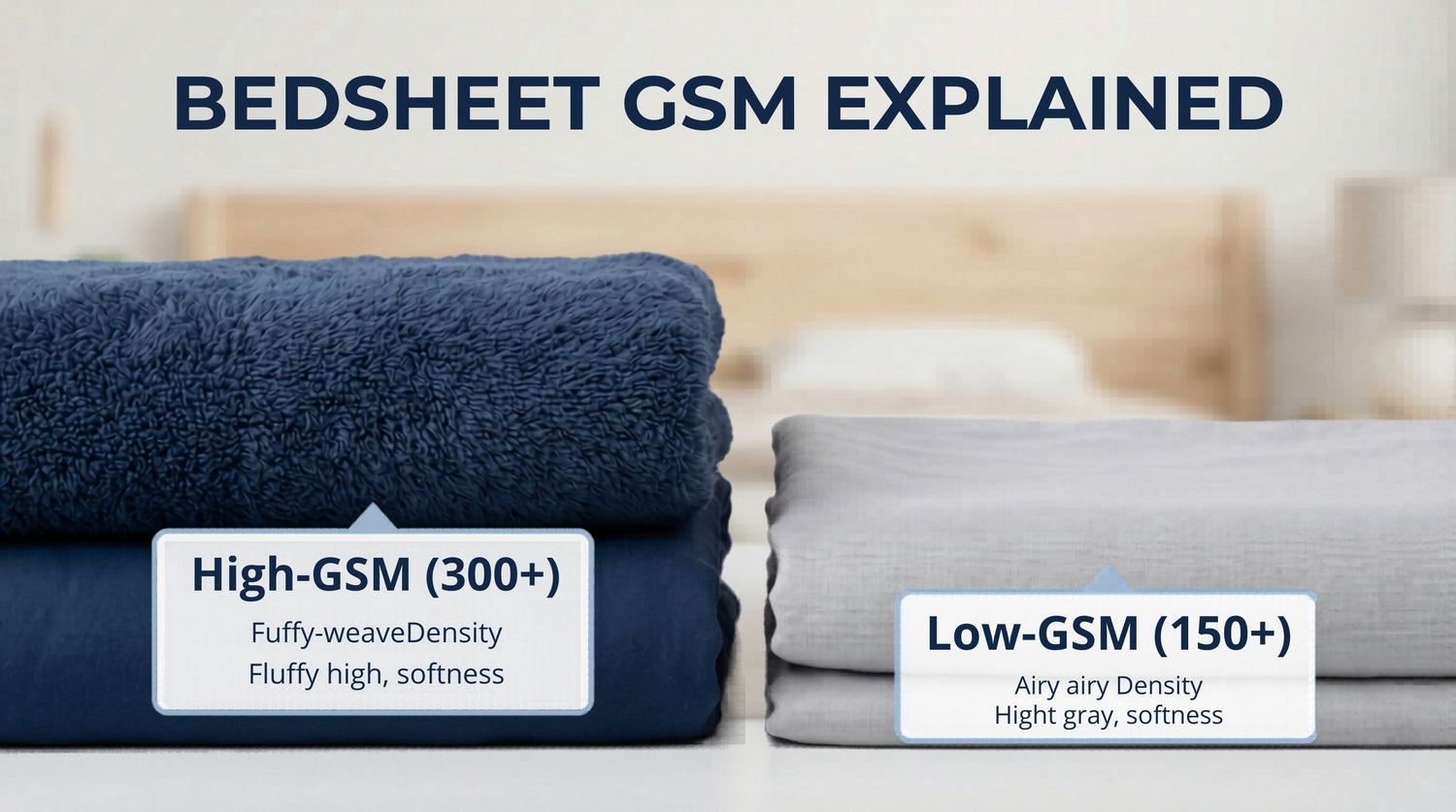
Quick Answer: GSM (grams per square metre) measures how heavy and dense a bedsheet fabric is. The ideal range for cotton bedsheets in India is 110–150 GSM. Lower GSM (under 100) feels thin and tears faster; higher GSM (above 180) feels heavy and traps heat. GSM matters as much as thread count — it tells you how substantial the fabric is, while thread count tells you how finely woven it is. Both numbers together give a complete picture of bedsheet quality.
Most Indian buyers obsess over thread count and ignore GSM — even though both numbers describe different things and both matter. A 300 TC bedsheet can feel paper-thin if its GSM is too low, and a 200 TC bedsheet can feel luxuriously heavy at 140 GSM. Once you understand both, you stop overpaying for inflated thread counts and start choosing bedding that actually feels right.
This guide explains what GSM is, the ideal ranges for Indian climates, and how to read it alongside thread count and fibre type. Whether you're shopping the Haus & Kinder bedsheet collection or comparing brands, this is the spec to actually pay attention to.
What is GSM?
GSM stands for 'grams per square metre'. It measures how much one square metre of fabric weighs. Higher GSM means heavier, denser fabric. Lower GSM means lighter, airier fabric. It's a straightforward, hard-to-fake number — unlike thread count, which can be inflated by counting multi-ply yarn separately.
GSM is used across the textile industry: bedsheets, towels, t-shirts, curtains. Once you internalise the ranges, you can judge fabric weight by spec alone — without touching it.
Why GSM matters as much as thread count
Thread count tells you how many threads are woven into a square inch. GSM tells you how much actual material that adds up to. Both numbers describe different aspects:
- Thread count — fineness of the weave (higher = finer threads, smoother feel).
- GSM — weight and density (higher = heavier, more substantial fabric).
A 200 TC sheet at 140 GSM feels substantial and durable. A 200 TC sheet at 90 GSM feels thin and flimsy. Same thread count, very different fabrics.
The ideal GSM range for Indian bedsheets
For 100% cotton bedsheets in Indian climates, the sweet spot is 110–150 GSM. Here's the full range:
- Under 90 GSM: very thin, low-grade. Often see-through. Avoid.
- 90–110 GSM: light summer weight. Good for hot, humid regions. Fine for guest rooms.
- 110–130 GSM: all-rounder for daily Indian use. Most balanced GSM range.
- 130–150 GSM: substantial, premium feel. Slightly heavier; great for AC bedrooms.
- 150–180 GSM: luxury weight. Drapes beautifully, traps a bit more warmth.
- 180+ GSM: very heavy. Better for cold climates or thick winter use only.
The 300 TC premium range sits in the 130–150 GSM band — substantial but breathable.
How GSM affects daily comfort
Breathability
Lower GSM breathes better. For hot, humid Indian summers, 100–120 GSM cotton feels coolest. For AC bedrooms or cooler climates, 130–160 GSM is more comfortable.
Drape
Higher GSM drapes more substantially — the bed looks 'made' even at a glance. Lighter GSM looks crisper, hospital-style.
Durability
Higher GSM lasts longer because there's more fibre to wear through. A 110 GSM sheet typically lasts 3 years; a 140 GSM sheet typically lasts 4–5 years.
Wash behaviour
Higher GSM cottons take longer to dry but hold their shape better. Lower GSM dries fast but loses shape after 50+ washes.
Cooling
Lower GSM = cooler. Higher GSM = warmer. For non-AC rooms in summer, lighter is better. For year-round AC use, heavier is more comfortable.
GSM by fabric type
Cotton
Most reputable cotton bedsheets sit between 100–160 GSM. Anything under 90 is suspicious — likely a thin or blended fabric.
Cotton percale
Typically 110–130 GSM. The plain weave keeps it light and crisp. Best for hot weather.
Cotton sateen
Typically 130–160 GSM. The denser weave makes it heavier and silkier. Best for AC rooms and winters.
Muslin
Lighter — 80–110 GSM. Open weave is intentional for breathability. Good for kids and babies.
Microfiber
Usually 70–100 GSM. Synthetic so weight is misleading — even at higher GSM, it doesn't feel like cotton.
Linen
Higher — 150–200 GSM. Linen is naturally heavier than cotton at the same thread count.
How to read a bedsheet label correctly
A complete, trustworthy label tells you all of these:
- Fibre: 100% cotton (not 'cotton rich' or 'cotton blend').
- Thread count: 200–300 TC for the sweet spot.
- GSM: 110–150 GSM for daily Indian use.
- Weave: percale, sateen, or muslin — clearly stated.
- Pre-shrunk: shrinks under 3% post-wash.
- Dye type: AZO-free reactive dyes for skin safety.
- Certifications: OEKO-TEX, GOTS, or BCI where applicable.
If GSM is missing from a product page, that's a warning sign — reputable brands publish it. Browse the Haus & Kinder bedsheet collection where every product page includes GSM, thread count, weave, and dye type.
Common GSM mistakes Indian buyers make
- Buying high-thread-count low-GSM sheets. A 1000 TC sheet at 80 GSM is paper-thin. The high TC is multi-ply marketing.
- Confusing 'heavy' with 'quality'. 200 GSM cotton is overkill in Indian summers — heavy doesn't mean better.
- Ignoring GSM for guest beds. A 100 GSM sheet at low cost is fine for occasional use; spending on 150 GSM here is waste.
- Choosing GSM without considering AC use. If your bed is AC most nights, higher GSM (140–160) feels better. If non-AC, lighter wins.
How to compare two bedsheets using GSM and TC
Quick rules of thumb when comparing two products:
- Same TC, higher GSM: the higher GSM option is more substantial, longer-lasting, slightly warmer.
- Same GSM, higher TC: the higher TC option is smoother, finer, slightly more refined feel.
- High TC, low GSM: red flag — likely multi-ply yarn or low-quality cotton. Skip.
- Low TC, high GSM: heavy, durable, casual feel. Good for everyday workhorse sets.
GSM ranges by use case
- Hot, humid summer use: 100–120 GSM percale.
- Year-round AC bedroom: 130–150 GSM percale or sateen.
- Cold climate winter use: 150–180 GSM sateen.
- Kids' beds: 100–120 GSM muslin or percale.
- Guest rooms (occasional use): 100–110 GSM percale.
- Premium master bedroom: 130–160 GSM sateen.
Frequently Asked Questions (FAQs)
Q. What is a good GSM for Indian bedsheets?
A. 110–150 GSM in 100% cotton is the all-rounder sweet spot. Below 100 feels thin; above 180 feels heavy in Indian heat.
Q. Is higher GSM always better?
A. No. Higher GSM means heavier and warmer — great for cold climates or AC bedrooms, uncomfortable in non-AC summer use. Match GSM to your climate and use case.
Q. What is the difference between GSM and thread count?
A. GSM measures fabric weight (substance). Thread count measures weave fineness (smoothness). A complete picture needs both numbers — you can't judge bedsheet quality from one alone.
Q. Why don't all brands list GSM?
A. Some don't measure or publish it. Others hide low GSM behind high thread count claims. Reputable Indian brands publish both numbers transparently.
Q. What GSM does Haus & Kinder use?
A. Most Haus & Kinder bedsheets sit in the 110–150 GSM range — optimised for Indian climates. The premium 300 TC range uses denser weaves at 140–150 GSM for that silky-but-breathable balance.
Final Word. Don't shop by thread count alone. Look at GSM too — the combination tells the truth about a bedsheet's quality. Browse the full Haus & Kinder collection with GSM listed on every product.
More from the Bedsheet Buying Series
- → Thread Count Explained: What Really Matters
- → Percale vs Sateen Bedsheets: Which One Should You Choose?
- → Top 7 Things to Consider Before Buying Bedsheets Online in India
- → Bedsheet GSM Explained: What That Number Really Tells You (you are here)
