


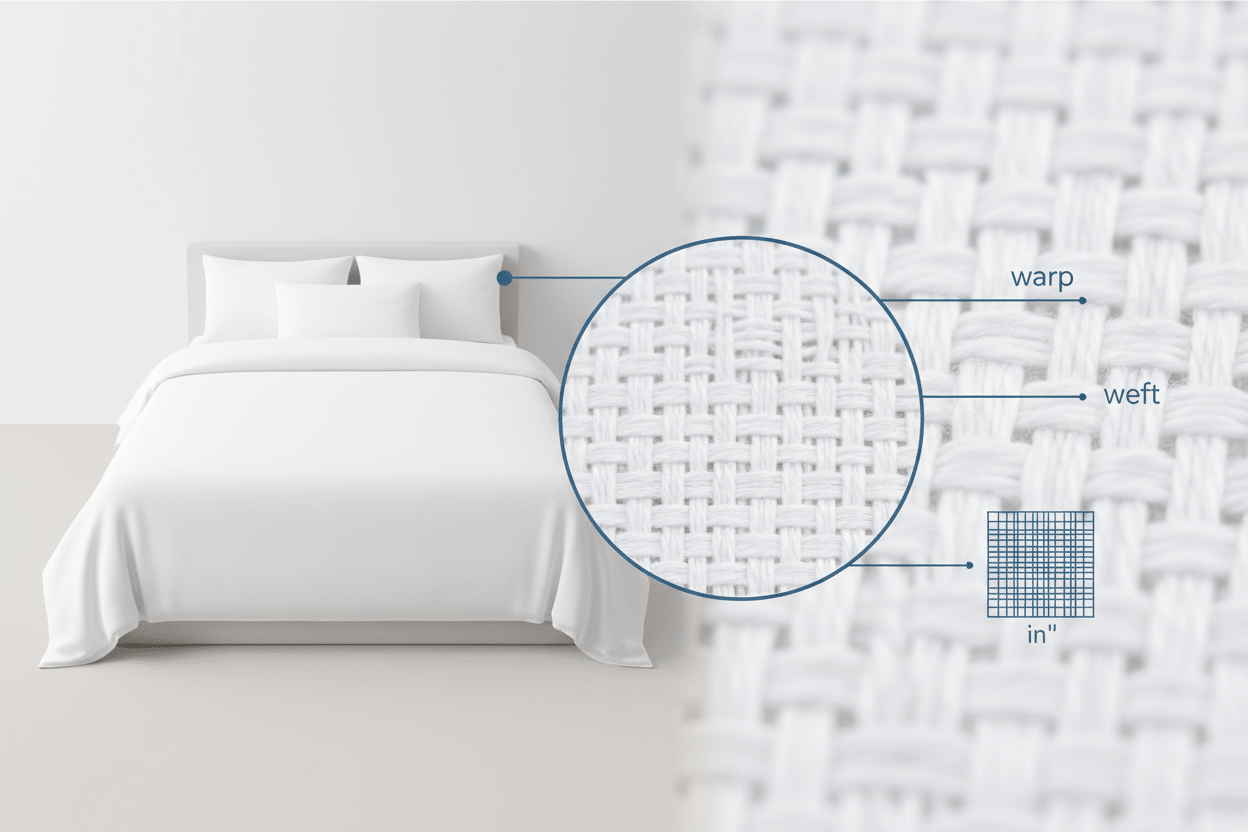
Quick Answer: Thread count is the number of horizontal and vertical threads woven into one square inch of fabric. The ideal range for cotton bedsheets in India is 200–300 TC. Higher numbers (600, 800, 1000) are usually marketing tricks using multi-ply yarn. Fibre quality, weave, and ply matter as much as the thread count number itself.
Thread count is the most-talked-about spec in bedsheets and the most misunderstood. A '1000 thread count' sheet from a generic seller often feels worse than a '300 thread count' sheet from a specialist brand like Haus & Kinder. Once you understand what the number actually measures — and what it does not — you stop overpaying for marketing.
This guide explains thread count in plain language, gives you the real sweet spot for Indian conditions, and shows you the small label clues that separate genuine quality from inflated numbers.
What is thread count?
Thread count is the total number of vertical (warp) and horizontal (weft) threads in one square inch of fabric. A 200 TC bedsheet has 100 warp + 100 weft threads per square inch. The number alone tells you nothing about fibre quality, weave style, or ply construction — all of which matter just as much for comfort and durability.
What is the ideal thread count for cotton bedsheets in India?
For Indian climates, 200–300 thread count is the sweet spot. Below 180 TC, the weave can feel rough. Above 400 TC, the fabric usually traps heat and is rarely worth the price premium. Reputable brands stay in this range and let fibre quality do the heavy lifting.
Quick guide by use case
- 140–180 TC — budget-friendly, crisp, lightweight summer use.
- 200–220 TC — best all-rounder for daily Indian use.
- 250–300 TC — silky, durable, ideal for AC bedrooms.
- 400+ TC — dense and warm, only suited to cold climates.
For an upgraded everyday feel, the Premium 300 TC bedsheet collection at Haus & Kinder hits the silky-but-breathable balance most homes are after.
Why '1000 thread count' is usually misleading
Thread counts above 400 are typically achieved by twisting two or three thinner threads together ('ply') and counting each strand separately. The cotton itself is often short-staple and lower quality. The result is a bedsheet that feels heavy, traps heat, and pills within months.
A high thread count bedsheet only delivers value if the fibre is long-staple combed cotton and the weave is genuine — not a multi-ply trick.
What actually matters more than thread count
1. Fibre type and length
Long-staple combed cotton (Egyptian, Pima, Indian Suvin) makes a smoother, stronger sheet than short-staple cotton at the same thread count. Combed cotton has had its short, weak fibres removed, so it is less prone to pilling.
2. Weave structure
- Percale — 1-over-1-under, crisp and breathable. Perfect for hot weather.
- Sateen — 4-over-1-under, silky and warmer. Ideal for AC bedrooms or winter.
- Muslin — open plain weave, lightweight and gentle. Great for kids and babies.
3. Ply
Single-ply means one yarn per thread; multi-ply twists multiple thinner yarns. Single-ply long-staple cotton is almost always better than multi-ply, because it relies on fibre quality rather than padding the count.
4. Finish and dyes
Pre-shrunk, AZO-free reactive dyes, and minimal chemical finishing keep cotton soft and skin-friendly. Skin-friendly bedsheets from Haus & Kinder use AZO-free reactive prints across all kids' and adult ranges.
How to read a bedsheet label correctly
- 100% Cotton — not 'cotton rich' or 'cotton blend'.
- Thread count — ideally 200–300 TC.
- Weave — percale, sateen, or muslin clearly stated.
- GSM — grams per square metre; 110–150 is typical for cotton bedsheets.
- Certifications — OEKO-TEX or GOTS for chemical safety.
Should you ever pay more for higher thread count?
Sometimes yes — if the brand uses long-staple, single-ply cotton at 300–400 TC. The hand feel is genuinely silkier. But if you are choosing between a 280 TC long-staple combed cotton sheet and a no-name 1000 TC sheet, the 280 TC option will outperform on every metric: softness, breathability, and lifespan.
What thread count does Haus & Kinder use?
Most durable cotton bedsheets from Haus & Kinder fall in the 144–220 TC range using combed long-staple cotton, optimised for Indian climates. The focus is on fibre quality, weave precision, and skin-safe dyes — not inflated marketing numbers. For buyers wanting a silkier feel, the Premium 300 TC range uses the same combed long-staple cotton in a denser weave.
Frequently Asked Questions (FAQs)
Q. Is 300 thread count good for bedsheets?
A. Yes. 300 TC in long-staple combed cotton is silky, durable, and well-suited for daily Indian use — especially in AC bedrooms or cooler months.
Q. Is higher thread count always better?
A. No. Above 400 TC, brands often use multi-ply yarn or low-grade cotton to inflate the number. Quality fibre at 200–300 TC outperforms most 1000 TC sheets.
Q. What is a good thread count for summer?
A. 180–220 TC in a percale weave. Lightweight, crisp, and breathable — ideal for hot Indian summers.
Q. Does Haus & Kinder publish thread count on every bedsheet?
A. Yes. Every Haus & Kinder bedsheet clearly lists thread count, weave, and material on the product page.
Q. What is more important than thread count?
A. Fibre length, ply, weave, and finishing chemistry. A 220 TC long-staple combed cotton sheet beats a 1000 TC short-staple multi-ply sheet on every comfort metric.
Final Word. Skip the marketing noise. Choose bedding built on real fibre quality — explore premium cotton bedsheets from Haus & Kinder, made for modern Indian homes.
More from the Bedsheet Buying Series
- → Thread Count Explained: What Really Matters When Buying Bedsheets (you are here)
- → Percale vs Sateen Bedsheets: Which One Should You Choose?
- → Top 7 Things to Consider Before Buying Bedsheets Online in India
