


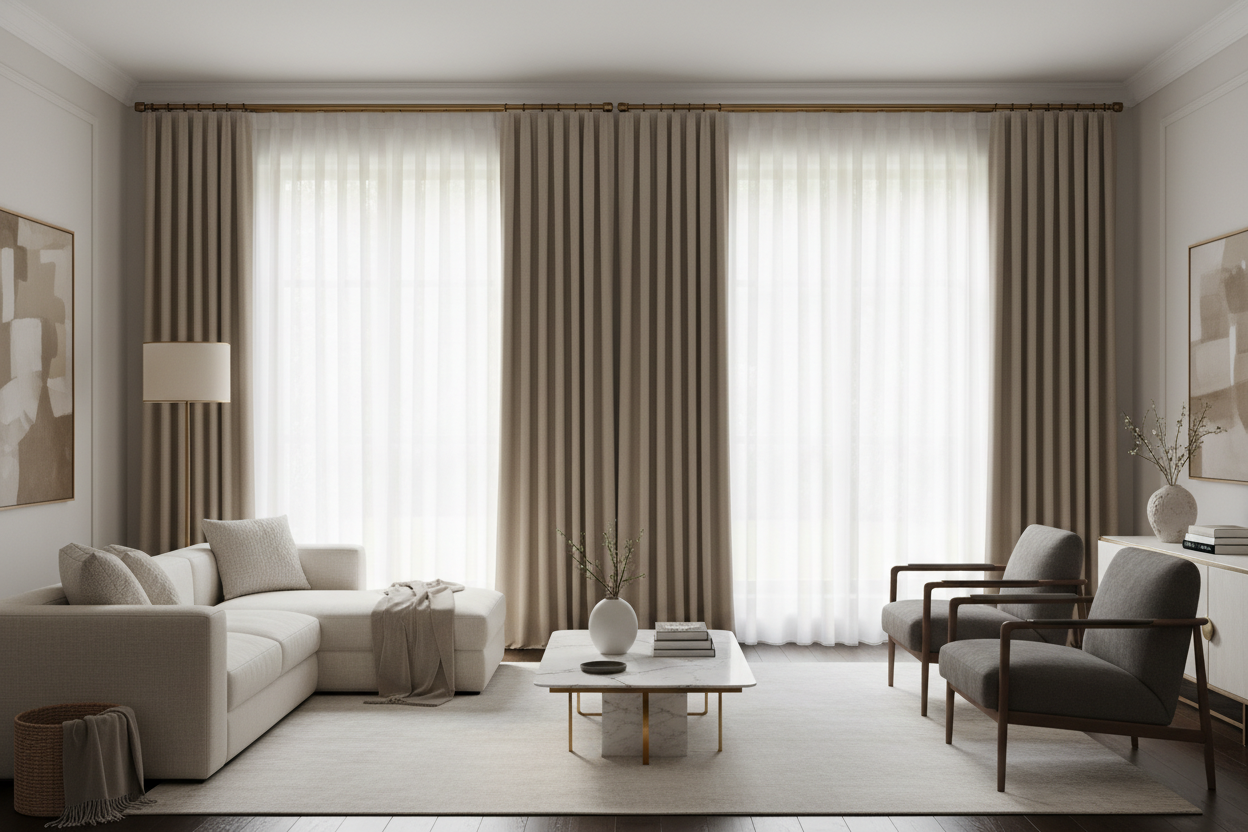
Quick Answer: To layer sheer and blackout curtains hotel-style, install a double curtain rod or two parallel single rods 3–4 inches apart. Hang the sheer panel closest to the window (inner rod), the blackout panel on the outer rod. Pull the sheer during the day for filtered daylight; close the blackout at night for full privacy and darkness. The layered look adds depth, controls light by hour, and feels designed.
Walk into any premium hotel room and you'll see the same setup at the windows — a soft sheer behind a heavier blackout panel. It's not just for looks. The layered system gives you total control over light through the day, plus a luxurious depth that single-panel curtains can't match. Done right, it transforms a plain bedroom into a five-star feel for the cost of a second curtain panel.
This guide walks through every step — hardware, hanging, fabric choice, and styling — so you can do the same in any Indian home. Use the sheer collection and blackout collection as starting points.
Why layer in the first place?
- Light control by hour: sheer during day, blackout at night.
- Visual depth: two layers of fabric add texture and richness.
- Privacy flexibility: partial daytime, full nighttime.
- Sound and heat: two layers insulate slightly better than one.
- Easy refresh: swap one layer to refresh the whole look.
Step 1 — Get the right hardware
Two options for the rod setup:
- Double curtain rod: a single bracket holding two parallel rods. Cleanest install. Brackets hold both rods together.
- Two single rods: independent rods mounted 3–4 inches apart vertically. Slightly more flexible — different finial styles per rod if you want.
For heavy blackout curtains (often 200+ GSM with foam backing), use a thicker rod (1.5+ inches diameter) with sturdy brackets every 3 feet to prevent sagging.
Step 2 — Choose the right fabrics
The two layers do different jobs, so their fabrics differ:
- Sheer layer (inner, closer to window): light voile, organza, or sheer polyester. 60–100 GSM. Job: filter sunlight, soften the room.
- Outer layer: cotton, jacquard, blackout polyester, or velvet. 130–200 GSM. Job: full blockage when drawn.
For a soft hotel feel, pair a white or ivory sheer with a beige, sage, or slate outer panel. For a dramatic master bedroom, pair the same sheer with a velvet or dark blackout outer.
Step 3 — Sizing both layers
Both panels must reach the floor — short curtains kill the hotel look. Both should also be 1.5×–2× the rod width for fullness. The sheer layer is typically slightly wider (more gathered) for that soft daytime glow when sun passes through.
Standard sizing recommendation: pick the same length (usually 7 ft or 9 ft) for both layers, and order the same total width for both. The main curtain collection lists exact dimensions on every product page.
Step 4 — Install in the right order
- Mount the brackets 4–6 inches above the window frame.
- Install the inner rod first (closer to the window).
- Hang the sheer panel on the inner rod.
- Install the outer rod 3–4 inches in front and slightly above (optional).
- Hang the blackout/heavy panel on the outer rod.
- Test sliding — make sure both layers move freely.
Step 5 — Style with intent
Layering looks intentional, not accidental. A few rules:
- Keep both layers the same length — no peeking sheer hem below the outer panel.
- Choose complementary, not matching, colours. Ivory sheer + sage outer reads designed; matching white + white reads cheap.
- Add a tieback for the outer panel to swag it open during the day.
- Use the same header style on both (both eyelet, or both rod pocket) for cohesion.
Best fabric combinations for Indian homes
- Master bedroom hotel look: white voile sheer + slate blackout.
- Living room formal: cream sheer + beige jacquard.
- Kids' room: ivory sheer + printed cotton blackout.
- Coastal / monsoon home: light cotton sheer + cotton-lined panel (avoid foam blackout).
- Modern minimal: white sheer + charcoal cotton.
Common layering mistakes
- Uneven lengths: the sheer peeks below the outer panel — looks unfinished.
- Same fabric for both layers: defeats the purpose; layering needs contrast.
- Too-thin outer panel: if the outer fabric is too light, it doesn't block at night.
- Mismatched headers: eyelet on one + rod pocket on the other looks inconsistent.
- Forgetting rod weight: two panels weigh 2x — needs strong brackets.
Frequently Asked Questions (FAQs)
Q. Do I need a double curtain rod for layering?
A. It's the easiest path, but two parallel single rods work too — and give you more design flexibility.
Q. How far apart should the rods be?
A. 3–4 inches. Closer and the layers crowd each other; further and the look feels disconnected.
Q. Should the sheer or the blackout be in front?
A. Sheer in back (closer to window), blackout in front. This way the blackout is what you see when both are drawn, and the sheer filters light when only the blackout is open.
Q. Can I layer two cotton curtains instead of sheer + blackout?
A. Yes — a light cotton over a heavier patterned cotton works beautifully for a softer, less formal look.
Q. Does layering reduce room temperature?
A. Slightly. Two layers insulate marginally better than one, especially against west-facing afternoon sun.
Final Word. Layering is the simplest upgrade with the biggest visual return in any bedroom. Browse sheers + blackouts in coordinated palettes to start your own hotel-look setup.
More from the Curtain Buying Series
- → How to Choose Perfect Curtains for Every Room
- → Blackout vs Sheer Curtains
- → How to Measure Curtains Correctly
- → Curtain Care Guide
- → Best Curtain Fabrics for Indian Summers
- → Eyelet vs Rod Pocket vs Tab Top
- → Cotton vs Polyester Curtains
- → Best Curtain Colors for Indian Living Rooms
- → How to Layer Sheer + Blackout (you are here)
- → Jacquard Curtains: The Hidden Gem
