


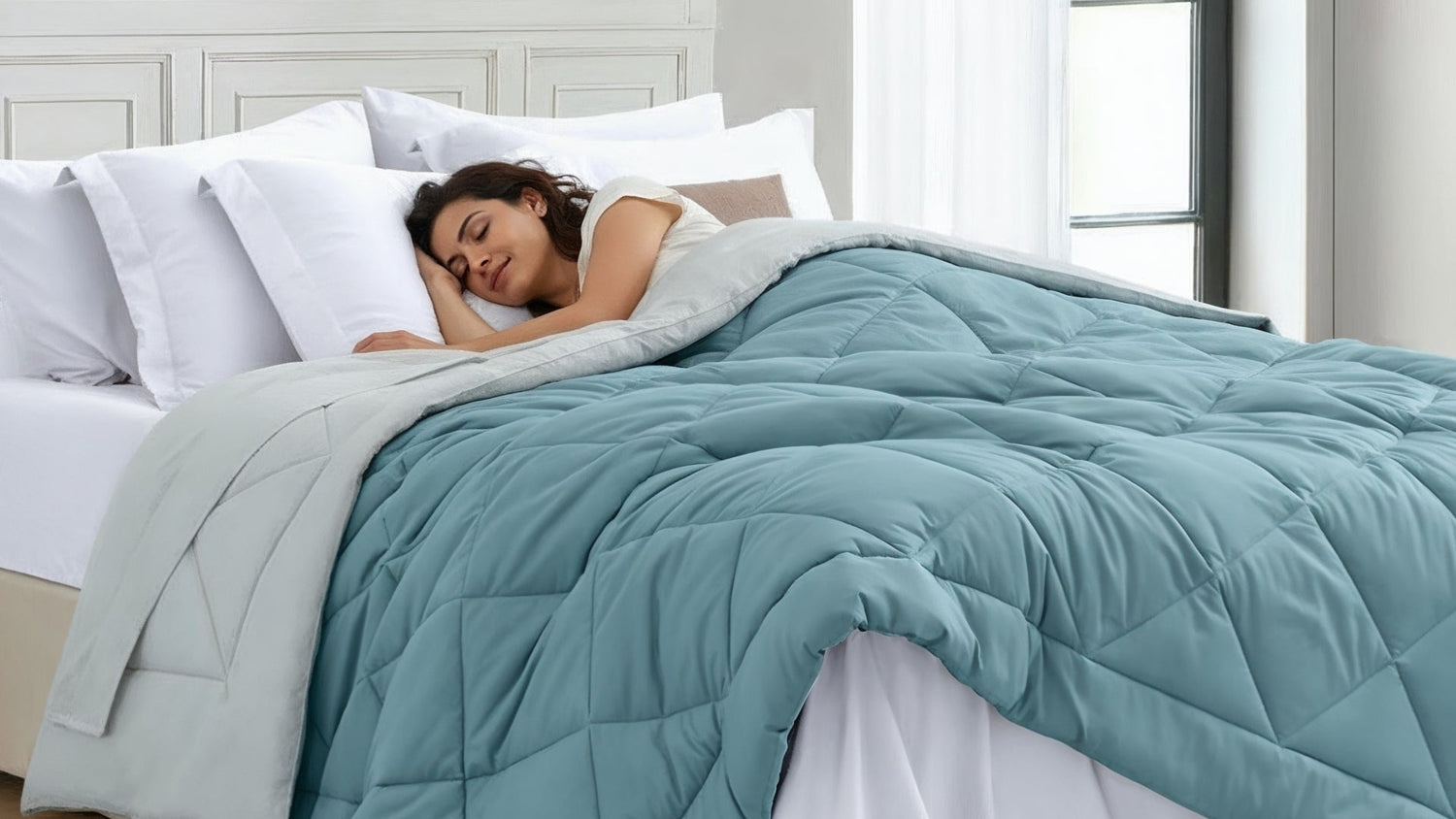
Most people do not start thinking about bedding until the weather changes. One night it is a little colder than normal and you grab whatever extra layer you can find. Sometimes it works. Sometimes it does not. That is usually the first time you realise that there is a difference between a simple blanket and a proper comforter.
A comforter is not simply thicker fabric. It is structured in a different way. It holds warmth differently. It alters the way your bed looks in the morning. Once you know how it works you start to see the difference right away.
What is a Comforter?
A comforter is a padded top layer that is designed to sit above your bedsheet. It has some filling inside and stitching across the surface to ensure that the filling is evenly distributed. Without that stitching, the material inside would move and be pulled to one side.
Unlike lighter coverings, bed comforters are intended to insulate. They trap in the body heat in a balanced manner. At the same time, they add to the general look of the bed. Lots of people underestimate this part. The top layer determines the feeling of the whole room.
The outer fabric can vary. So can the filling. That combination determines how warm, breathable or heavy the comforter feels.
Types of Bed Comforters for Every Sleeping Need
Different people sleep in different ways. Some like warmth that is cocoon-like. Others want something light that barely rests on the body. That is why there are different bed comforters
comforters available.
-
Down Comforters
Down comforters are stuffed with soft bird feathers. They are surprisingly light for the warmth they give. However, they may not be appropriate for everyone, especially those who are sensitive to natural fillings.
-
Down Alternative Comforters
These use synthetic fibres in place of feathers. They are easier to wash and often are chosen for practical reasons.
-
Cotton Comforter
A cotton comforter is great for many Indian households. Cotton is breathable and still comfortable in mild winters.
-
Wool Comforters
Wool provides natural insulation and adapts to temperature changes. It feels warm without retaining excess moisture.
-
Silk Comforters
Silk filled comforters are lighter and smoother. They have a refined appearance and are often chosen for moderate climates.
-
Seasonal Comforters
Some comforters are meant for the summer season. They are thinner and lightweight. Winter versions are thicker and hold the warmth better.
The choice depends on how you sleep and how comfortable you are.
Important Benefits of Having a Comforter on Your Bed
A comforter alters the performance of your bed at night. The effect is subtle but noticeable.
-
Provides Warmth and Comfort
The layered filling produces insulation that feels steady instead of patchy. It avoids the cold spots that lighter blankets sometimes leave.
-
Enhances Sleep Quality
When the warmth is evenly distributed, your body is relaxed more easily. Sleep tends to feel nonstop.
-
Easy to Maintain and Use
Many comforters today are functional. Depending upon material, they can be washed at home with care.
-
Helps to Improve the Aesthetics of a Bedroom
A comforter helps add depth and structure to your bed. It often eliminates the need for non-structural layers of decoration.
It becomes a part of both comfort and design.
How to Select the Best Comforter for Your Home
-
Finding the best comforter starts with understanding your climate. In warmer regions, lighter fillings, such as cotton or synthetic blends, often are more suitable. In colder places, thicker ones will perhaps feel more reassuring.
-
Size matters as well. The comforter should hang slightly over the sides of the mattress and not overwhelm the mattress. A layer that is too small appears incomplete. Too large may feel bulky.
-
Consider weight preference. Some people sleep better under a bit heavier layer because you feel secure. Others prefer the least amount of pressure.
-
Look carefully at stitching quality. Even stitching helps to keep filling from shifting over time.
-
And finally, choose colours carefully. A comforter should accent the room, not dominate it.
Comforter Care and Maintenance for Long Lasting Use
-
Comforters need to be cared for from time to time but not constantly.
-
Air them out regularly. This helps to keep it fresh and keeps the filling balanced. When washing, make sure to strictly follow label instructions. Use mild detergent. Avoid harsh cycles.
-
Check for complete drying before storage. Moisture can be harmful to filling as well as fabric.
-
When not in use, store in breathable covers. Proper storage will retain texture and warmth for future seasons.
These small habits will save your bedding investment.
Conclusion
A comforter does not affect only the temperature. It impacts how you settle down to bed and how your room looks each morning. Choosing the right one means considering the climate, filling, size and maintenance.
For those seeking bedding that is as comfortable as it is thoughtfully designed, Haus & Kinder has comforters that are designed with a focus on the quality of materials and contemporary Indian interiors. Their collections are a reflection of everyday practicality while maintaining a refined look, making them a reliable option for homes that need long-lasting comfort.
FAQs
What is the best comforter for all seasons?
A medium-weight cotton or down alternative comforter usually works well in most climatic conditions in India, with a balanced warmth.
How often should you wash your comforter?
Washing every few months is usually sufficient, unless there are spills. Regular airing helps in keeping freshness.
Can you use a comforter without a cover?
Yes, many comforters are intended for direct use. Using a cover may help to reduce washing.
What is the difference between a comforter and a blanket?
A comforter is padded and stitched to retain filling evenly. A blanket is usually a single layer fabric with no internal insulation.
