


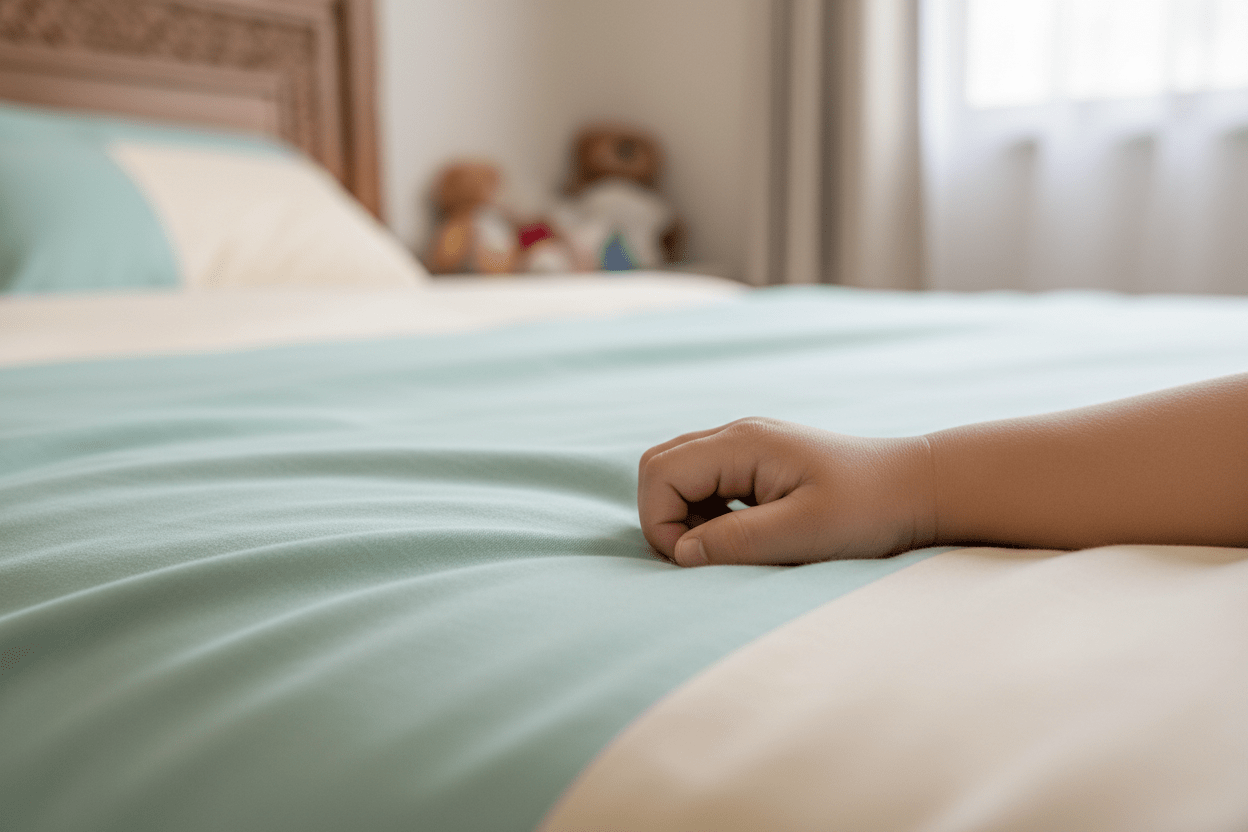
Quick Answer: Choose 100% cotton bedsheets for kids' rooms — never microfiber or polyester blends. Look for AZO-free reactive dyes, pre-shrunk fabric, and OEKO-TEX certification where possible. Avoid loud prints with heavy chemical pigments; pastels and natural dyes are safer. Wash all new bedsheets before first use to remove manufacturing residue. The right kids' bedsheet is breathable, washable, and tested skin-safe — not just affordable.
Kids' beds are where children spend more time than anywhere else. Sleep, sick days, sick of school, playing on top of the covers — the bedsheet is in constant contact with sensitive skin. Most parents focus on the print and the price; the spec that actually matters (skin safety) doesn't make it onto the product page filters.
This guide covers what to look for, what to avoid, and how to spot truly safe kids' bedsheets in India. Whether you're buying for a 4-year-old or a 12-year-old, start with the Kids Bedsheet collection at Haus & Kinder.
Why kids need different bedsheets from adults
Three reasons skin safety is more critical for kids:
- Thinner skin: children's skin is up to 30% thinner than adult skin and absorbs chemicals more readily.
- More sensitive: eczema, rashes, and allergies are more common in childhood.
- More contact: kids sweat more, drool, spill food and water — meaning more skin contact with the fabric overall.
1. Insist on 100% cotton
Microfiber, polyester, and polyester-cotton blends are unsuitable for kids' beds. They trap heat (kids overheat faster than adults), shed microplastics, and can trigger sensitive skin reactions. 100% cotton is the safest, most breathable, most skin-friendly fibre for children.
Look for "100% cotton" explicitly on the label — not "cotton rich" (often 50% polyester) or "cotton blend" (vague).
2. Check the dye type — AZO-free is non-negotiable
AZO dyes are a family of synthetic colourants used in cheap textiles. Some break down into chemicals (aromatic amines) that are skin-irritating and have been linked to longer-term health concerns. They're banned in EU and increasingly regulated in India for kids' textiles.
Reputable Indian brands use AZO-free reactive dyes — safer, more colourfast, and gentler on sensitive skin. Look for "AZO-free", "OEKO-TEX certified", or "reactive dyes" on the product page.
3. Look for OEKO-TEX or GOTS certification
- OEKO-TEX Standard 100: tests fabric for over 100 harmful substances. Highly trusted globally for children's textiles.
- GOTS (Global Organic Textile Standard): certifies organic cotton end-to-end. Premium tier.
- BCI (Better Cotton Initiative): sustainability-focused; less about chemical safety.
OEKO-TEX is the most relevant for kids' room safety.
4. Prefer pre-shrunk cotton
Pre-shrunk cotton stays its size after washing. Kids' beds get washed weekly (sometimes more), and non-pre-shrunk cotton can shrink 5–10% on first wash — leaving the fitted sheet slipping off the mattress within a month.
5. Choose weave wisely
- Percale cotton: light, breathable, crisp — ideal for kids in Indian summers.
- Muslin: the safest option for younger kids (2–6 years). Lightweight, soft, gentle.
- Sateen: silkier and warmer — use for cooler months only.
- Microfiber: avoid for kids — synthetic, traps heat, sheds microplastics.
6. Pick safe prints and colours
Loud bright prints can use heavier pigment concentrations. Pastel and natural-toned prints are generally lower in dye load. Block-printed and reactive-dyed designs are safer than chemically processed prints.
For kids' rooms, balance fun (prints they love) with safe (reputable brand, AZO-free dye). The Kids Bedsheet collection uses safe prints in playful designs.
7. Wash before first use — always
New bedsheets carry manufacturing residue: dye fixers, finishes, anti-wrinkle treatments. Washing before first use removes most of this. Use a mild detergent, cold water, and a single rinse cycle. Skip fabric softener for kids' bedding — it leaves a film that can irritate sensitive skin.
Red flags to avoid
- No mention of fibre type or "cotton rich" labelling.
- No mention of dye safety or AZO-free certification.
- Strong chemical smell out of the package.
- Extremely cheap pricing (under ₹400 for a queen) — usually polyester.
- Unknown brand with no customer reviews or care details.
- Colour bleeds noticeably on first wash — sign of poor dye fixing.
Skin-safe bedding checklist
- ☐ 100% cotton (not blend).
- ☐ AZO-free reactive dyes.
- ☐ OEKO-TEX or GOTS certified (when available).
- ☐ Pre-shrunk.
- ☐ Pre-washed before first use.
- ☐ Mild detergent, no fabric softener, no bleach.
- ☐ Reputable brand with stated specs and good reviews.
Frequently Asked Questions (FAQs)
Q. Are microfiber bedsheets safe for kids?
A. Generally not recommended. Microfiber traps heat (kids overheat faster), can trigger sensitive skin, and sheds microplastics during washing.
Q. What does AZO-free mean for kids' bedding?
A. AZO-free dyes don't break down into harmful aromatic amines. They're the standard for safe, non-irritating colour in children's textiles.
Q. Is OEKO-TEX certification worth looking for?
A. Yes — it's the most rigorous globally-recognised standard for textile chemical safety, with particular focus on children's products.
Q. Do brightly coloured kids' sheets contain more chemicals?
A. Sometimes — heavy pigment concentrations need fixing agents. Pastels and reactive-dyed designs usually use less chemical load.
Q. How often should kids' bedsheets be washed?
A. Weekly for older kids, every 4–5 days for younger ones (more spills, drool, accidents). Always wash before first use.
Final Word. 100% cotton, AZO-free, pre-shrunk, OEKO-TEX where possible. Browse the Kids Bedsheet collection and Crib Sheets built specifically for safety-first parents.
More from the Baby & Kids Bedding Series
- → Muslin Bedding for Babies
- → Skin-Safe Bedsheets for Kids' Rooms (you are here)
- → Crib Sheet Sizing Guide India
- → Newborn Sleep Essentials
