


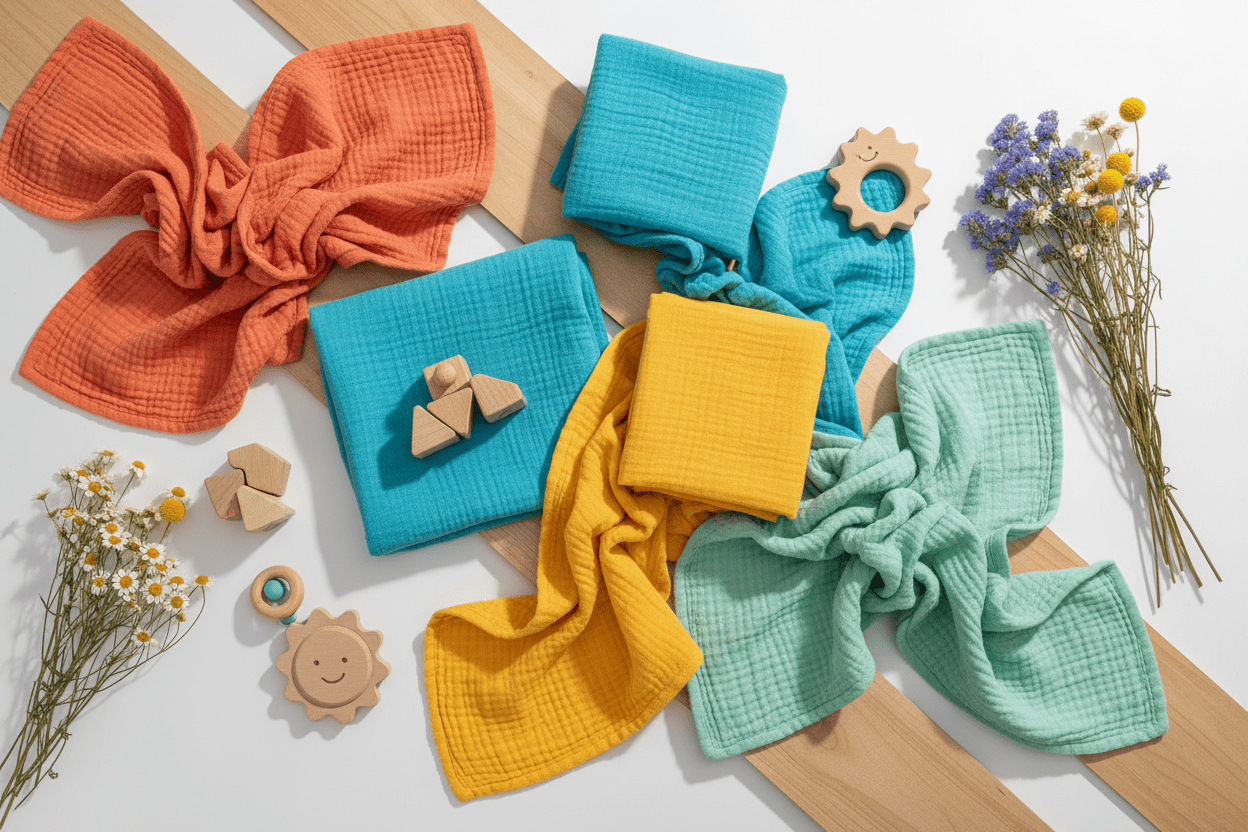
Quick Answer: Muslin is the safest, most breathable, most versatile fabric for baby bedding. The loose plain weave allows air to flow, regulates temperature naturally, and reduces overheating risk. Indian parents have used muslin (mulmul) for centuries for exactly these reasons. For newborns, muslin swaddles, crib sheets, and blankets are the gold-standard starter kit — gentle on skin, easy to wash, and gets softer with each wash.
Walk into any Indian paediatrician's office and ask what fabric is safest for newborn bedding. The answer is almost always muslin (mulmul). It's not a trendy recommendation — it's a centuries-old Indian standard backed by modern paediatric guidance. This guide explains why muslin works, what to look for, and how to build a complete muslin starter kit for a newborn.
Whether you're a first-time parent or stocking up for the new arrival, start with the Swaddles & Wraps collection and the broader Baby Essentials range.
What is muslin?
Muslin is a lightweight, loose-weave 100% cotton fabric. The weave is intentionally open — you can see slight gaps between threads when held to light. This openness is what makes muslin so breathable, and it's the reason muslin has been the Indian baby fabric of choice for generations.
Quality muslin uses fine cotton yarn in a plain weave. Layers (single, double, 4-layer, 6-layer) increase warmth and density while maintaining breathability.
Why muslin is the gold standard for babies
1. Breathability — reduces overheating risk
Overheating is one of the top risk factors paediatricians warn about for infants. Muslin's loose weave allows air to circulate, naturally regulating baby's temperature. This is critical in Indian summers when even air-conditioned rooms can swing in temperature.
2. Skin safety
Baby skin is up to 30% thinner than adult skin and far more reactive. Muslin's 100% cotton fibre is hypoallergenic, breathable, and free from synthetic irritants. AZO-free, pre-shrunk muslin is the safest choice — the Haus & Kinder muslin swaddles use reactive dyes that meet OEKO-TEX skin-safety standards.
3. Softens with each wash
Muslin starts slightly crisp and softens beautifully after 5–10 washes. By month 2 of use, it feels like the gentlest fabric in the nursery.
4. Quick-drying
The open weave dries in 1–2 hours of shade-drying — important during monsoon when laundry takes longer and parents need bedding back fast.
5. Versatile uses
One muslin square can be a swaddle, a burp cloth, a stroller cover, a nursing cover, a sun shade, a play mat, or a light blanket. Few baby items have this many uses.
The complete muslin starter kit for newborns
What every Indian parent needs in muslin from day one:
1. Muslin swaddles (3–4 minimum)
Used to wrap newborns for sleep, comfort, and the "fourth trimester" feeling. Newborns sleep 16+ hours a day, so 3–4 swaddles let you rotate through laundry. Browse the Swaddles & Wraps collection with 97 designs.
2. Muslin burp cloths
Feeding gets messy fast. Soft muslin burp cloths protect clothes and gentle on baby's face.
3. Muslin blankets (2)
Stroller naps, AC bedroom layering, monsoon evenings. Browse the Baby Blanket collection.
4. Muslin crib sheets
For the crib mattress — breathable, skin-safe, fits standard Indian crib sizes. Check the Crib Sheets collection.
5. Muslin nursing cover
Doubles as a sun shade, stroller cover, and feeding privacy. Most multi-use item in the kit.
What to look for when buying muslin
- 100% cotton — not "cotton-rich" blends.
- Pre-shrunk — so sizes stay accurate after wash.
- AZO-free reactive dyes — non-toxic and skin-safe.
- OEKO-TEX certified if possible — independent skin-safety standard.
- Layered options: single-layer for swaddles, double for burp cloths, 4–6 layer for blankets.
- Generous size: swaddles should be at least 100×100 cm to wrap newborns properly.
Muslin care basics
- Wash before first use — softens the fabric and removes manufacturing residue.
- Gentle machine cycle, cold or warm water, mild liquid detergent.
- No fabric softener — coats the fibres and reduces absorbency.
- Shade-dry to preserve colour and prevent fading.
- Iron on low heat if needed — usually not necessary; muslin's relaxed look is the charm.
Frequently Asked Questions (FAQs)
Q. Is muslin safe for newborn skin?
A. Yes — 100% cotton, breathable, hypoallergenic. Paediatrician-recommended for newborns and sensitive infant skin.
Q. How is muslin different from regular cotton?
A. Muslin is woven loosely on purpose — gaps between threads create breathability. Regular cotton is tightly woven and warmer.
Q. How many muslin swaddles does a newborn need?
A. Minimum 3–4 to rotate through washing. Newborns spit up and soil swaddles often in the first weeks.
Q. Can I use muslin in winter?
A. Layered (4-layer or 6-layer) muslin works in mild Indian winters. For colder regions, layer muslin with a heavier blanket on top.
Q. Does muslin shrink after washing?
A. Pre-shrunk muslin stays its size. Non-pre-shrunk can shrink 3–5% on first wash — always buy pre-shrunk.
Final Word. Muslin is the safest, most versatile fabric for Indian newborn bedding. Browse the muslin swaddle collection, baby blanket range, and the all-baby essentials at Haus & Kinder.
More from the Baby & Kids Bedding Series
- → Muslin Bedding for Babies (you are here)
- → Skin-Safe Bedsheets for Kids' Rooms
- → Crib Sheet Sizing Guide India
- → Newborn Sleep Essentials
