


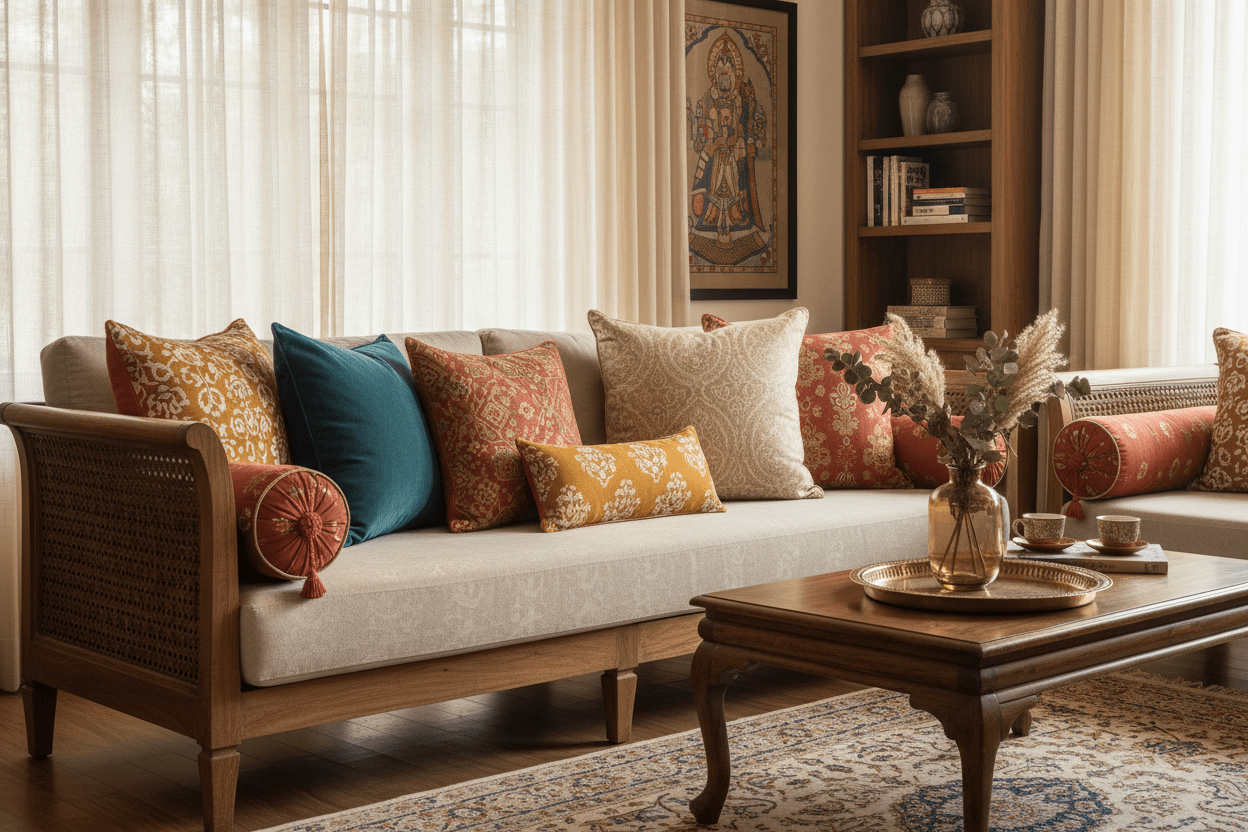
Quick Answer: Cushion covers are the easiest, cheapest upgrade for any Indian living room. Standard sizes are 16×16 inches and 18×18 inches (square) or 12×20 inches (rectangular bolster). Cotton and jacquard covers work daily; velvet and silk for formal accents. Mix 3–5 cushions per sofa in coordinated colours and varied textures. Replace 2–3 times a year to refresh the room without redecorating.
Cushion covers are the most-overlooked upgrade in Indian living rooms. They're cheap, easy to swap, and instantly change the mood of a room. Yet most homes buy one set, never replace them, and let the cushions become invisible. This guide explains how to pick covers that work, how to mix them, and how to use them to refresh a room every few months.
Whether you're starting with bare cushions or upgrading existing ones, start with the Cushion Covers collection — 156 designs across cotton, jacquard, embroidered, and printed.
Standard Indian cushion cover sizes
- 16×16 inches: the most common size. Fits most sofa cushions.
- 18×18 inches: slightly larger; statement size for modern sofas.
- 20×20 inches: oversized; for floor seating or large sofas.
- 12×20 inches (bolster): rectangular; for lumbar support.
- 24×24 inches: floor cushions for traditional Indian seating.
Measure your existing cushion insert before ordering — covers are sized to fit specific inserts, not to a universal standard.
Best cushion cover fabrics
Cotton (daily-use)
Breathable, washable, soft. The default for any room with high cushion contact. Look for 100% cotton in 130–160 GSM. Printed and solid options work equally well.
Jacquard (premium accent)
Woven patterns add texture and depth. Sits between cotton and velvet in formality. Pairs beautifully with solid sofas. Browse the Embroidered Cushion Covers for textured premium options.
Knitted (cozy texture)
Chunky knits add warmth and visual texture. Best in cooler months and casual living rooms. The Knitted Cushion Cover collection covers this category.
Velvet (formal luxury)
Rich, soft, photogenic. Use sparingly in formal living rooms and master bedrooms. Avoid daily-use rooms — velvet shows wear quickly with constant touching.
Linen (relaxed sophistication)
Wrinkles deliberately, drapes softly, looks intentionally lived-in. Suits modern and coastal interiors.
How many cushions per sofa?
- 2-seater sofa: 2–3 cushions.
- 3-seater sofa: 3–5 cushions.
- L-shape / sectional: 5–7 cushions.
- Floor seating: 4–6 cushions of varied sizes.
The rule: odd numbers feel more balanced than even. 3 or 5 looks designed; 4 looks symmetrical and stiff.
The colour pairing system
For a cohesive cushion mix on any sofa:
- One base colour: matches or complements the sofa.
- One accent colour: contrasts the sofa (mustard against grey, terracotta against cream).
- One neutral: ties them together (white, beige, taupe).
This 3-colour palette extends to walls and curtains too. Once the system is set, you can swap individual cushions seasonally without rebuilding the whole look.
Pattern mixing rules
- One large pattern: the dominant motif (floral, abstract, geometric).
- One small pattern: stripes, dots, small florals.
- One textured solid: jacquard, knitted, or embroidered solid.
Three different scales (large, small, solid texture) read as intentional. Three large patterns together look chaotic.
Seasonal refresh schedule
- Spring/Summer: light cotton, pastels, florals, breezy prints.
- Monsoon: muted tones, textured fabrics, deeper colours.
- Diwali/Festive: jacquard, embroidered, jewel tones, gold accents.
- Winter: velvet, knitted, deep warm tones.
Two cushion swaps a year is enough to keep the living room feeling refreshed.
Where to use which fabric
- Living room sofa: mix cotton, jacquard, embroidered.
- Master bedroom (decorative): velvet, satin, embroidered.
- Floor seating: heavy cotton, jacquard, knitted.
- Kids' room: washable cotton, fun prints.
- Outdoor / balcony: outdoor-rated cotton or polyester.
Care for cushion covers
- Cotton: machine-wash gentle cycle, cold water.
- Jacquard: gentle cycle or dry-clean for heavy pieces.
- Embroidered: turn inside-out before washing, gentle cycle.
- Velvet: dry-clean only.
- Always remove inserts before washing covers.
- Iron on the reverse side to protect prints and textures.
Frequently Asked Questions (FAQs)
Q. What is the standard cushion cover size in India?
A. 16×16 inches is the most common. 18×18 is the next size up. Measure your insert before buying.
Q. How many cushion covers should I have for one sofa?
A. 3–5 cushions on a 3-seater sofa is the sweet spot. Odd numbers look more designed.
Q. Can I mix different fabrics in one cushion set?
A. Yes — mixing textures (cotton + jacquard + knitted) looks intentional. Keep the colour palette tight (3 colours max).
Q. How often should I replace cushion covers?
A. Functionally, every 2–3 years. Style-wise, every 6–12 months to refresh the room.
Q. Are embroidered cushion covers easy to wash?
A. Yes — gentle cycle, turn inside-out, no bleach. The embroidery survives 50+ washes with care.
Final Word. Cushion covers are the cheapest interior refresh in any Indian home. Browse the full Cushion Cover collection, Embroidered range, and Knitted Cushions at Haus & Kinder.
More from the Home Essentials Series
- → Cushion Cover Guide (you are here)
- → Cotton vs Satin Pillow Covers
- → Best Bath Towels for Indian Bathrooms
