


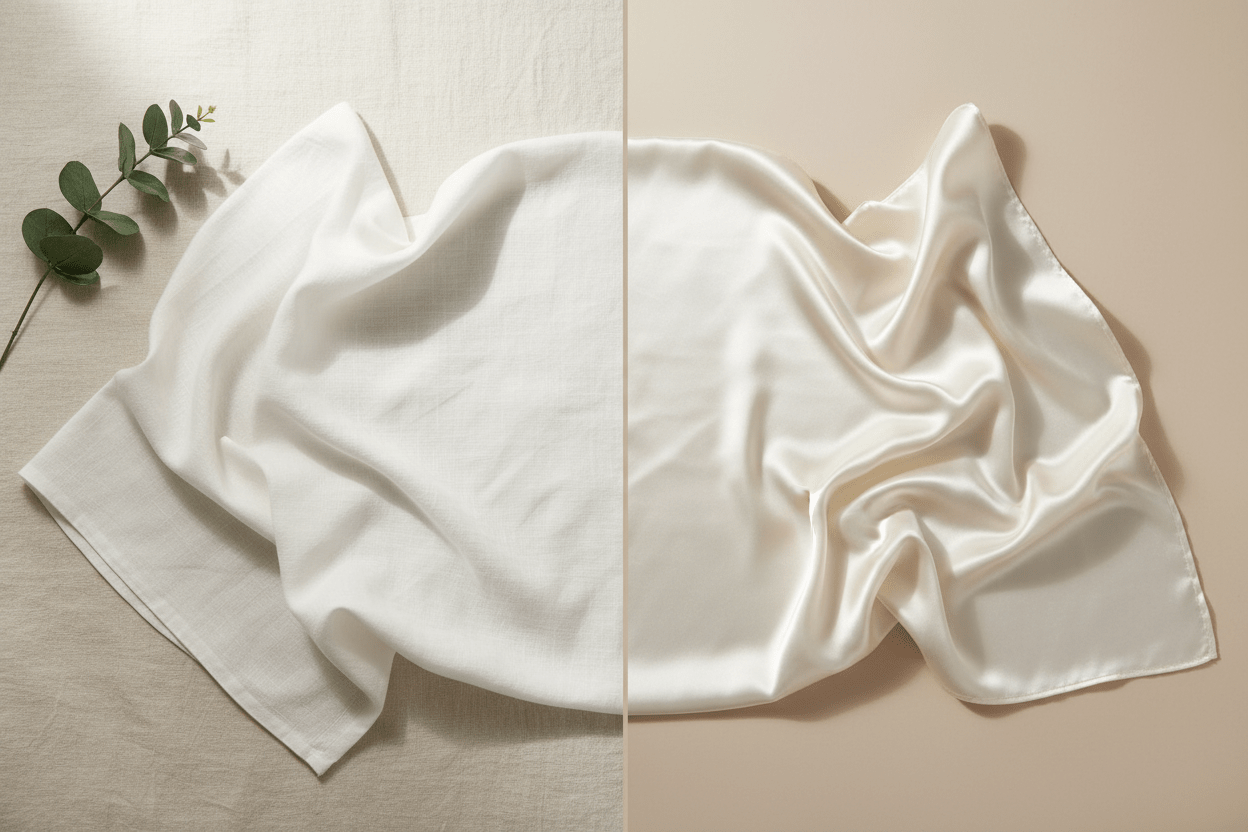
Quick Answer: Cotton pillow covers breathe well, absorb sweat, and suit hot Indian summers — but they create friction that can frizz hair and crease the face. Satin pillow covers are smoother, kinder to hair and skin, and used by beauty experts — but they trap slightly more heat. The smart compromise: cotton pillow cover daily, satin pillow cover overnight 2–3 times a week for hair and skin benefits. The pillow cover is the one bedding item where the satin upgrade actually pays off.
Beauty influencers, dermatologists, and hair stylists all recommend the same thing: switch to a satin pillow cover. The smooth surface reduces friction during sleep, preventing hair frizz, breakage, and face creases. But is the hype justified? And does the trade-off in breathability matter in Indian climates? This guide breaks it down.
Whether you're looking at the Satin Pillow Cover collection or sticking with cotton, here's what the evidence actually shows.
Why pillow cover material matters
Your face is in contact with the pillow cover for 7–8 hours a night. That's 50+ hours a week of friction, moisture, and surface contact. The pillow cover affects:
- Hair condition: friction causes breakage and frizz.
- Face skin: friction can create morning creases and irritation.
- Acne: sweat and bacteria buildup on the cover.
- Allergies: dust mites accumulate.
- Temperature: heat trapping or release.
What is satin?
Satin is a weave (not a fibre). Most satin pillow covers in India are polyester satin — affordable, smooth, durable. Pure silk satin is the premium variant; significantly more expensive and more delicate.
What is cotton?
Cotton pillow covers are made from natural cotton fibres in various weaves (percale, sateen, jersey). Cotton breathes, absorbs moisture, and washes easily — the daily-use standard.
Cotton vs satin pillow covers: head-to-head
Hair friendliness
Satin wins decisively. The smooth surface reduces friction by up to 70% vs cotton. Less hair tangling, less breakage, less frizz. Especially valuable for curly, wavy, or chemically-treated hair.
Skin friendliness
Satin wins. Smooth surface reduces face creases and morning lines, especially for back/side sleepers. Less skin irritation for sensitive types.
Breathability
Cotton wins. Allows air through; satin traps slightly more heat. Important for non-AC Indian summer use.
Sweat absorption
Cotton wins. Absorbs perspiration; satin doesn't. Sweat pools on satin surfaces.
Acne and bacteria
Mixed verdict. Cotton absorbs sweat (can harbour bacteria if not washed often) but breathes. Satin doesn't absorb but pools moisture on the surface. Both need frequent washing (twice a week).
Durability
Cotton wins. Lasts 4–6 years with care. Polyester satin: 2–3 years before sheen dulls. Silk satin: 1–3 years with very careful care.
Care
Cotton wins. Machine-washable, tolerates regular use, easy to iron. Satin needs gentler care and snags more easily.
Price
Cotton is more budget-friendly. Polyester satin is mid-tier. Silk satin is premium-tier.
When satin pillow covers are genuinely worth it
- Curly or chemically-treated hair (colour, smoothing, etc.).
- Hair prone to breakage or frizz.
- Sensitive skin with morning creases or irritation.
- Acne-prone skin (though use gentler with regular washing).
- Cooler-climate use or AC bedroom year-round.
When cotton remains the better pick
- Hot, humid, non-AC bedrooms.
- Heavy sweaters who need moisture absorption.
- Daily-use rotation (cotton tolerates more washing).
- Budget-conscious buyers.
- Older sleepers prone to overheating.
The smart hybrid approach
Most Indian beauty-conscious sleepers use both:
- Cotton pillow cover daily. Breathable, washable, comfortable in summer.
- Satin pillow cover 2–3 nights a week. Especially after hair wash, after facial, or in cooler months.
- Both rotate through washing. Wash satin gentler than cotton.
Browse the Satin Pillow Cover collection for premium satin options.
How to spot quality satin pillow covers
- Smooth, glossy surface with no rough patches.
- Heavier weight (less likely to snag).
- Hidden zip (not exposed sewing).
- Reinforced corners for stitching durability.
- Specific care instructions on the label.
Care for satin pillow covers
- Wash twice a week with gentle cycle, cold water.
- Use a mesh laundry bag to prevent snagging.
- Skip fabric softener and bleach.
- Air-dry or low-tumble dry only.
- Iron on the reverse side at low heat.
Frequently Asked Questions (FAQs)
Q. Are satin pillow covers good for hair?
A. Yes — the smooth surface reduces friction during sleep, preventing breakage and frizz. Especially helpful for curly or treated hair.
Q. Do satin pillow covers help with acne?
A. Mixed evidence. Satin doesn't absorb sweat, but bacteria can pool on the surface. Wash twice weekly regardless of material.
Q. Is silk better than polyester satin?
A. For hair/skin benefits — yes, slightly. For durability and price — polyester satin wins. Both deliver the smoothness benefit.
Q. How often should I wash satin pillow covers?
A. Twice a week. Same as cotton — face contact for 8 hours nightly means rapid buildup.
Q. Do satin pillow covers feel hot?
A. Slightly more than cotton. Feels cool on first touch but traps body heat over the night.
Final Word. Cotton daily, satin a few nights a week — the smart combo. Browse the Satin Pillow Cover collection and the broader Cushion Cover range.
More from the Home Essentials Series
- → Cushion Cover Guide
- → Cotton vs Satin Pillow Covers (you are here)
- → Best Bath Towels for Indian Bathrooms
