


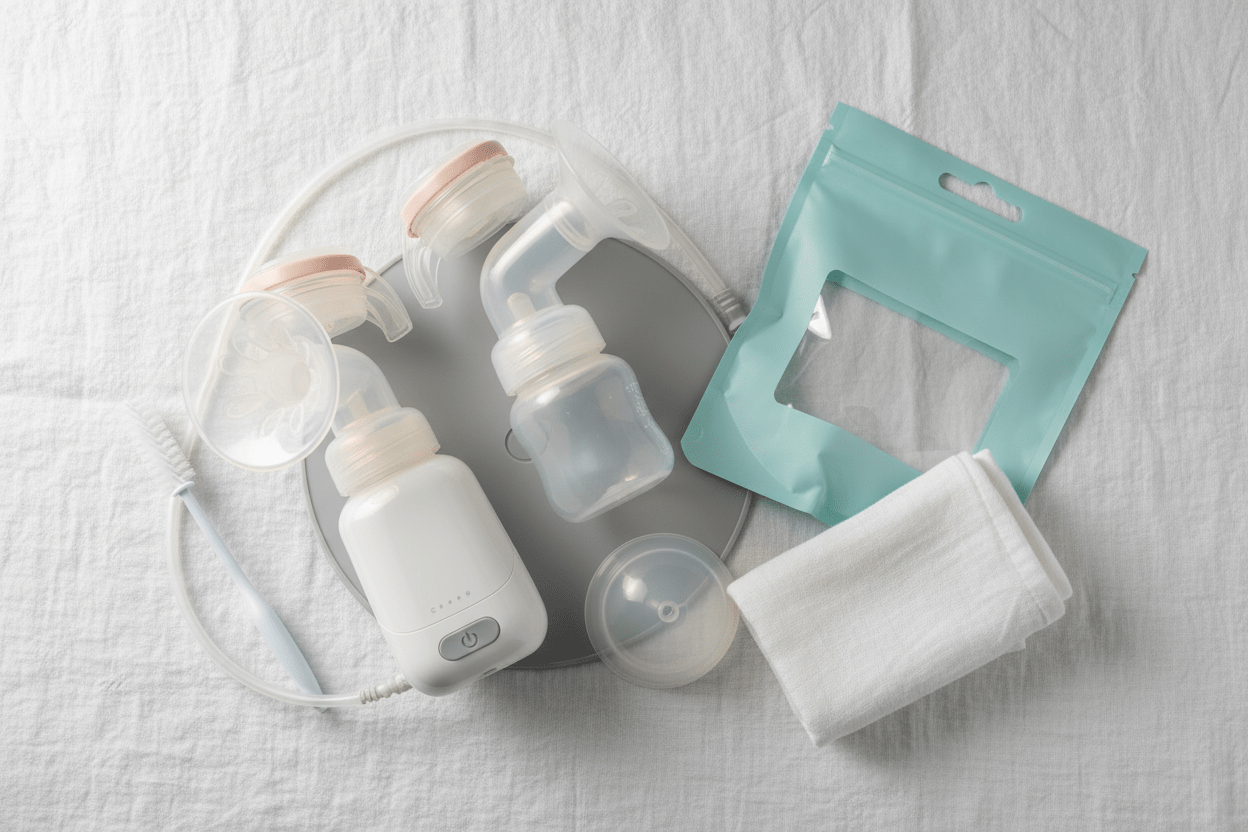
Cleaning your electric breast pump isn't the most glamorous part of motherhood, but it's easily
one of the most important. Proper cleaning protects your baby from harmful bacteria, preserves
your pump's suction and performance, and extends the life of every part.
The good news: once you have a simple routine in place, it takes just a few minutes per
session. Here's your complete, no-fuss guide to cleaning and maintaining an electric breast
pump the right way.
Why Proper Breast Pump Cleaning Matters
Breast milk is nutrient-rich, which makes any pump part that touches it a perfect environment for
bacterial growth. Skipping steps or rushing through cleaning can lead to:
• Bacterial contamination of milk
• Mold growth inside tubing and valves
• Weakened suction from buildup
• Shortened pump lifespan
• Increased illness risk for your baby
Ten minutes of cleaning prevents all of the above.
What Parts Need Cleaning?
Every pump is slightly different, but for most electric breast pumps, these parts need to be
cleaned after every use:
• Flanges (breast shields)
• Valves and membranes
• Milk collection cups or bottles
• Connectors
• Bra strap or accessories that touch milk
Never clean or submerge: The motor unit itself. Water will damage the electronics. Always
wipe it down with a clean, slightly damp cloth and dry immediately.
How to Clean Your Breast Pump: Step-by-Step
Step 1: Wash Your Hands
Always start with thoroughly washed hands using soap and warm water. This is the single most
important step and the easiest to skip.
Step 2: Disassemble the Pump
Take apart every piece that comes into contact with milk. This includes the flanges, valves,
membranes, and collection cups. Leaving parts assembled traps milk residue and promotes
bacteria.
Step 3: Rinse Immediately After Pumping
Rinse all parts under cool running water first to remove milk residue. Cool water is important, hot
water can cause milk proteins to stick to surfaces.
Step 4: Wash With Lukewarm Soapy Water
Fill a clean basin (used only for pump parts, not general dishes) with lukewarm water and a
mild, fragrance-free dish soap. Scrub each part gently with a clean brush dedicated to pump
cleaning.
Pay close attention to:
• Small crevices in valves and membranes
• Inside the flange tunnel
• Threaded connections where milk can pool
Step 5: Rinse Thoroughly
Rinse every part under clean running water until all soap residue is gone. Any leftover soap can
affect milk taste and irritate your baby.
Step 6: Air Dry Completely
Place parts on a clean, lint-free towel or dedicated drying rack. Let them air dry completely
before reassembling or storing. Trapped moisture is a leading cause of mold growth inside
pump parts.
Avoid: Towel-drying the insides of parts (introduces lint) or reassembling while damp.
How to Sterilize Your Breast Pump
Daily washing is enough for most days, but sterilization adds an extra layer of protection.
Sterilize at least once a day, especially during the first few months.
Boiling Method
1. Place clean pump parts in a pot of boiling water.
2. Boil for 5–10 minutes.
3. Remove with clean tongs and let air dry on a clean towel.
Check your user manual first, some parts aren't boil-safe.
Steam Sterilizer Method
Electric steam sterilizers are fast, easy, and safe for most pump parts. Follow the manufacturer's
instructions for your specific sterilizer.
Microwave Steam Bags
Reusable steam bags are a great option for traveling or quick sterilization. They sterilize in just
90 seconds to 3 minutes.
Cleaning Schedule: What to Do and When
After Every Pumping Session
• Disassemble all milk-contact parts
• Rinse under cool water
• Wash with lukewarm soapy water
• Air dry completely
Once Daily
• Sterilize all milk-contact parts
• Wipe down the motor unit with a damp cloth
• Check parts for wear or damage
Weekly
• Deep clean your drying rack and cleaning brush
• Replace valves and membranes if they show wear
• Inspect tubing (if applicable) for moisture or discoloration
Caring for the Motor Unit
The motor is the brain of your electric pump and it's sensitive. Follow these rules:
• Never submerge or rinse it under water
• Wipe with a slightly damp, clean cloth after each session
• Keep away from humidity, steam, and direct sunlight
• Charge fully before the first use and avoid letting the battery completely drain
• Store in a cool, dry place when not in use
Troubleshooting: When to Replace Parts
Even with perfect care, certain parts wear out over time:
Valves and membranes: Every 2–3 months, or sooner if suction weakens
Flanges: Annually, or if you notice cracks or cloudiness
Bra strap: As needed for comfort and hygiene
Suction issues are almost always caused by worn-out valves not the motor. Replace them
before assuming something bigger is wrong.
Quick Do's and Don'ts
Do:
• Wash hands before every session
• Clean all parts after every use
• Air dry completely before storing
• Sterilize at least once daily
• Use only mild, fragrance-free soap
Don't:
• Submerge the motor unit in water
• Use harsh chemicals or bleach on milk-contact parts
• Reassemble parts while still damp
• Share pump parts between users
• Store parts in a sealed container while wet
Built for Easy Cleaning
Pumps with simple, modular designs are far easier to keep hygienic than complicated multi-part
systems. The Haus and Kinder Electric Breast Pump is designed with easy disassembly and
BPA-free materials, making your daily cleaning routine as quick and stress-free as possible
which means you're more likely to actually stick with it.
The Bottom Line
A clean breast pump is a safe, efficient, long-lasting breast pump. Build a simple post-session
routine, sterilize daily, and protect your motor unit from water and your pump will take care of
you and your baby for the entire breastfeeding journey.
Frequently Asked Questions
How often should I sterilize my breast pump?
At least once a day is ideal, especially during the first few months of your baby's life.
Can I put breast pump parts in the dishwasher?
Only if the manufacturer explicitly allows it. Hand-washing is generally gentler and more
effective.
What if my pump loses suction over time?
Worn valves or membranes are almost always the cause. Replace them every 2–3 months.
Do I really need to wash parts after every single session?
Yes. Milk residue grows bacteria quickly, even in the fridge. Always clean after each use.
Can I store used pump parts in the fridge between sessions?
Some moms do this during busy workdays (the "fridge hack"), but fully washing between
sessions is safest and recommended by most health experts.

0 comments