


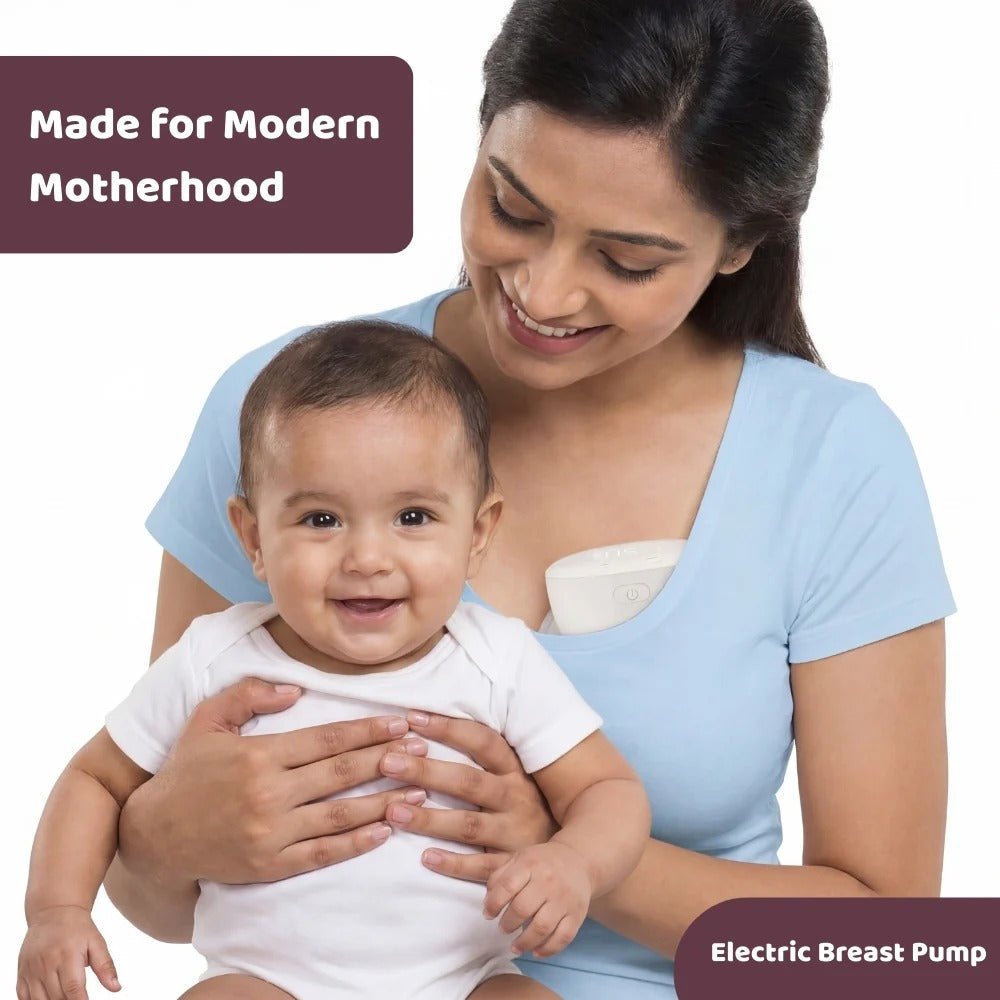
There's a quiet revolution happening in the world of breastfeeding and it's wearable. Hands-free breast pumps have completely reshaped what pumping looks like for modern moms, replacing bulky machines, dangling tubes, and "pumping chairs" with sleek, discreet devices that tuck right inside a nursing bra.
If you've been on the fence about making the switch, here's everything you need to know about why hands-free pumps are becoming the go-to choice especially for working, traveling, and multitasking moms.
What Is a Hands-Free Breast Pump?
A hands-free breast pump is a wearable device that fits entirely inside your bra. Unlike traditional pumps that require you to hold flanges against your breasts while tethered to a motor, a hands-free pump combines the motor, flange, and collection cup into a single self-contained unit.
No cords. No tubes. No sitting still. You can walk, work, drive, or hold your baby while pumping, all without anyone even knowing.
Why Working Moms Are Switching to Hands-Free Pumps
Returning to work while breastfeeding is one of the hardest transitions a new mom makes. Hands-free pumps are solving some of the biggest pain points:
1. You Can Actually Get Work Done
Traditional pumping sessions effectively freeze you in place for 20+ minutes, multiple times a day. With a wearable pump, you can answer emails, join video calls (on mute, of course), or power through deliverables, all while pumping. That's hours of reclaimed productivity every week.
2. No More Hunting for a "Pumping Room"
Not every workplace has a dedicated lactation space and the ones that do are often booked solid. A discreet, ultra-quiet pump means you can pump at your desk, in your car, or even during a walk without announcing it to the entire office.
3. Travel Becomes Manageable
Flights, client meetings, work trips - a portable, rechargeable hands-free pump turns what used to be a logistics nightmare into something genuinely manageable. No outlet required, no assembly in a cramped bathroom stall.
4. You Keep Your Supply Strong
The biggest enemy of a working mom's milk supply is missed sessions. When pumping is easy and discreet, you actually do it consistently. That consistency is what protects your supply.
Benefits Beyond the Workplace
Hands-free pumping isn't just for office jobs. It's a lifeline for:
• Stay-at-home moms juggling older kids and chores
• Moms of multiples who can't afford to be immobilized
• Night pumpers who want quiet operation without waking the baby
• Active moms who refuse to let pumping pause their lives
What Makes a Great Hands-Free Breast Pump
Not all wearable pumps are created equal. Here's what to prioritize:
Comfortable, Secure Fit
A good wearable pump sits snugly inside most nursing bras without shifting during movement. An adjustable bra strap adds extra security for active moms.
Dual Modes: Stimulation and Expression
Stimulation mode triggers let-down; expression mode extracts milk efficiently. Both are essential for full, comfortable sessions.
Adjustable Suction Levels
Look for at least 9 suction levels so you can dial in what works for your body not a one-size-fits-all setting.
Multiple Flange Sizes
This is non-negotiable. The wrong flange size means pain, low output, and frustration. Quality hands-free pumps like the Haus and Kinder Electric Breast Pump come with multiple flange options (17mm, 19mm, 21mm, 24mm) and a size guide.
Whisper-Quiet Motor
An ultra-quiet pump is essential if you want to pump discreetly in meetings, public spaces, or next to a sleeping baby.
Long Battery Life
A full charge in around 2 hours that lasts 7–8 sessions means you can go a full workday without worrying about batteries dying mid-session.
Sufficient Capacity
180ml of collection capacity lets you complete a full session without stopping to empty the cup.
Hands-Free vs Traditional Breast Pumps
|
Feature |
Hands-Free Pump |
Traditional Pump |
|
Portability |
Excellent |
Limited |
|
Multitasking |
Yes |
No |
|
Discreet use |
Yes |
Difficult |
|
Feature |
Hands-Free Pump |
Traditional Pump |
|
Noise |
Ultra-quiet |
Often loud |
|
Setup time |
Minimal |
Moderate |
For most working moms, the hands-free format simply wins on every practical axis.
Tips for Using a Hands-Free Pump Effectively
Find your right flange size first. Nothing else matters if the fit is wrong.
Start with stimulation mode. Give it 2–3 minutes to trigger let-down before switching to expression mode.
Wear a supportive nursing bra. A well-fitted bra holds the pump securely against your body for better suction and comfort.
Stay hydrated and relaxed. Tension and dehydration are the two fastest ways to sabotage a pumping session.
Keep a spare charger at work. Future you will thank present you.
The Bottom Line
Hands-free breast pumps have taken the awkward, immobilizing experience of traditional pumping and turned it into something you can genuinely fit into a busy life. For working moms, moms of multiples, and anyone who refuses to let breastfeeding dictate their entire day, the switch is almost always worth it.
The Haus and Kinder Baby Electric Breast Pump offers everything modern moms are looking for - a truly hands-free, ultra-quiet design with 9 suction levels, dual modes, 4 flange sizes, and 7–8 sessions on a single charge. It's built to fit into your life, not rearrange it.
Frequently Asked Questions
Can I really pump discreetly at work with a hands-free pump?
Yes. Quality hands-free pumps are ultra-quiet and fit inside a nursing bra, making them practically invisible under normal clothing.
Do hands-free pumps extract as much milk as traditional ones?
With the right flange size and correct mode usage, output is comparable to traditional pumps for most moms.
How long does the battery last on a wearable pump?
The Haus and Kinder pump, for example, supports 7–8 sessions on a single 2-hour charge. Can I walk around while pumping?
Yes! That's the whole point. Just avoid lying flat or sleeping while pumping.

0 comments