


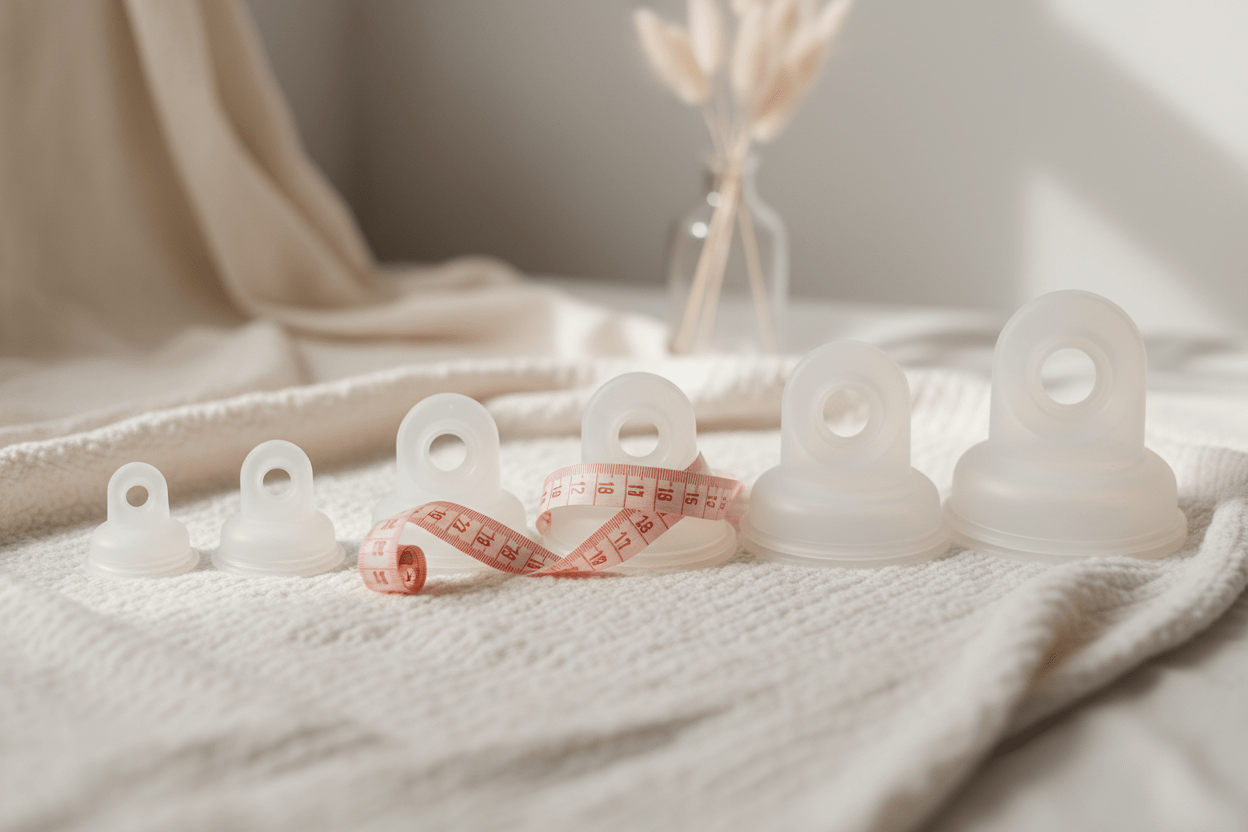
If pumping hurts, if your output is lower than it should be, or if your nipples look sore or discolored after a session, the problem usually isn't you, your supply, or your pump. It's your flange size.
Flange fit is the single most important factor in comfortable, effective pumping and it's also the most overlooked. Most pumps ship with just one size, which is rarely the right one for most moms. Here's how to figure out exactly what size you need and why it matters so much.
What Is a Breast Pump Flange?
The flange (sometimes called the "breast shield") is the cone-shaped part of the pump that sits directly over your nipple and areola. It creates the seal that allows suction to draw milk out.
Flanges are sized in millimeters based on the diameter of the opening at the tunnel where your nipple goes. Common sizes range from 13mm to 36mm, though most moms fall between 17mm and 24mm.
Why Flange Size Matters More Than You Think
A poorly fitting flange doesn't just cause discomfort, it actively sabotages your pumping:
• Pain and soreness during and after pumping
• Reduced milk output because the suction isn't working efficiently
• Damaged nipple tissue, including cracks, bruising, and blanching
• Clogged ducts and mastitis from incomplete emptying
• Lower supply over time because your breasts aren't being fully drained The good news: the right flange can fix most of these issues overnight.
Signs Your Flange Doesn't Fit Properly
Flange Is Too Big
• Your areola gets pulled deep into the tunnel along with your nipple
• You feel a rubbing or pinching sensation around the areola
• Your nipple moves around instead of staying centered
• Output drops even though suction feels normal
Flange Is Too Small
• Your nipple rubs against the sides of the tunnel
• You feel pain, burning, or friction during pumping
• Your nipple looks white or red after pumping (blanching)
• Milk flow is noticeably restricted
Flange Is Just Right
• Your nipple moves freely in the tunnel without rubbing
• Only a small amount of areola is pulled in (or none at all)
• No pain, blanching, or soreness
• Milk flows consistently throughout the session
How to Measure Your Nipple for the Correct Flange Size You'll need a measuring tape or ruler with millimeter markings. Here's the step-by-step:
1. Measure when your nipple is at rest, not during or immediately after pumping or nursing. 2. Measure the diameter of your nipple only, don't include the areola.
3. Use millimeters. Measure straight across the widest part of the base of your nipple.
4. Measure both sides. Breasts are often asymmetrical, and you may need different flange sizes for each side.
Once you have your measurement, add 2–4mm to determine your flange size. For example:
• 13–14mm nipple → 17mm flange
• 15–16mm nipple → 19mm flange
• 17–18mm nipple → 21mm flange
• 20–21mm nipple → 24mm flange
This small buffer gives your nipple room to move without friction.
Why Pumps With Multiple Flange Sizes Are Essential
Most pumps come with just one or two flange sizes, forcing moms to guess and then buy replacements separately often after weeks of painful pumping.
This is why pumps like the Haus and Kinder Electric Breast Pump include 4 flange sizes right in the box (17mm, 19mm, 21mm, and 24mm) along with a size guide. You can test sizes from day one, find your perfect fit, and even use different sizes on each breast if needed without spending extra or waiting on shipping.
How to Test If a Flange Fits Correctly
Even with the right measurement, you should always verify fit during a real pumping session:
5. Center your nipple in the tunnel before starting.
6. Start with a low suction setting.
7. Watch your nipple during pumping, it should move freely without touching the sides. 8. Check for areola pull, only a tiny amount of areola should be drawn in. 9. Assess comfort, there should be zero pain or pinching.
10. Check your nipple afterward, it should look normal, not white, red, or misshapen. If anything feels off, try the next size up or down.
Common Flange Sizing Mistakes to Avoid
Measuring after pumping. Nipples swell during pumping, which gives you an artificially large measurement.
Assuming both sides are the same. Measure each side separately, asymmetry is extremely common.
Ignoring pain. Pain is never normal during pumping. If it hurts, the fit is wrong.
Going too big "to be safe." A flange that's too large reduces suction efficiency and can pull in too much areola.
Sticking with the default size. The flange your pump ships with is a starting point, not a final answer.
When to Re-Measure
Nipple size can change over the course of your breastfeeding journey. Re-measure if you notice:
• New pain or discomfort
• A sudden drop in output
• Significant changes in your body (postpartum recovery, weight changes, etc.) • Your first weeks back pumping after a long break
The Bottom Line
The right flange size transforms pumping from something you dread into something that genuinely works. If you've been struggling with pain or low output, the fix may be as simple as changing your flange size.
Look for a breast pump that includes multiple flange sizes from the start. The Haus and Kinder Electric Breast Pump comes with 4 sizes (17mm, 19mm, 21mm, and 24mm) plus a sizing guide, so you can find your perfect fit without the guesswork or the extra purchases.
Frequently Asked Questions
What's the most common breast pump flange size?
Most moms fall between 19mm and 24mm, though individual sizes vary widely. Can I use different flange sizes on each breast?
Absolutely and many moms need to. Asymmetry is completely normal.
How do I know if my flange is too small?
You'll feel friction, see nipple blanching (whitening), or experience pain during pumping. Does flange size affect milk supply?
Yes. An ill-fitting flange causes incomplete emptying, which can reduce supply over time. Should I re-measure after a few months of pumping?
Yes, especially if you notice changes in comfort or output.

0 comments